

Stories by @shadowthorne3
60 stories

The Tale of the Three Brothers
Three brothers, travelling along a lonely, winding road at twilight reached a deep treacherous river where anyone who attempted to swim or wade would drown. Learned in the magical arts, the brothers conjured a bridge with their wands and proceed to cross. Halfway through the bridge, a hooded figure stood before them. The figure was the enraged spirit of Death, cheated of his due. Death cunningly pretended to congratulate them and proceeds to award them with gifts of their own choosing. The eldest brother, a combative man, asked for a wand more powerful than any in existence. Death granted his wish by fashioning the Elder Wand from a branch of a nearby elder tree standing on the banks of the river. The second brother, an arrogant man, chose to further humiliate death, and asked for the power to recall the deceased from the grave. Death granted his wish by crafting the Resurrection Stone from a stone picked from the riverbank. The third and youngest brother, who was the most humble and wise, did not trust Death and asked for something to enable him to go forth without Death being able to follow. A reluctant Death, most unwillingly, handed over a part his own Invisibility cloak.

The Young Dumbledore
"By the end of his first year, he would never again be known as the son of a Muggle-hater, but as nothing more or less than the most brilliant student ever seen at the school." —Dumbledore's years as a Hogwarts student
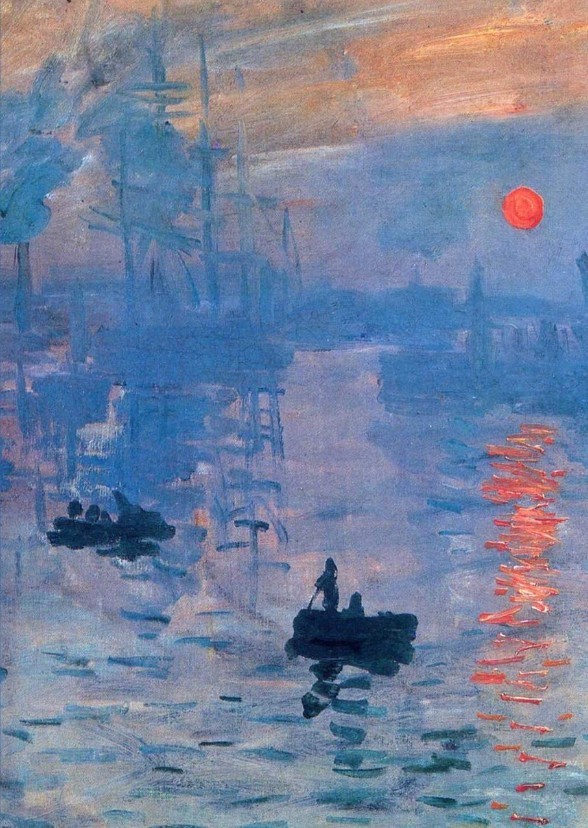
Lives of Artists: Impressionism
Impressionism is a 19th-century art movement characterized by relatively small, thin, yet visible brush strokes, open composition, emphasis on accurate depiction of light in its changing qualities (often accentuating the effects of the passage of time), ordinary subject matter, inclusion of movement as a crucial element of human perception and experience, and unusual visual angles. Impressionism originated with a group of Paris-based artists whose independent exhibitions brought them to prominence during the 1870s and 1880s. The Impressionists faced harsh opposition from the conventional art community in France. The name of the style derives from the title of a Claude Monet work, Impression, soleil levant (Impression, Sunrise), which provoked the critic Louis Leroy to coin the term in a satirical review published in the Parisian newspaper Le Charivari. The development of Impressionism in the visual arts was soon followed by analogous styles in other media that became known as impressionist music and impressionist literature.

Titus Andronicus
The play begins shortly after the death of the Roman emperor, with his two sons, Saturninus and Bassianus, squabbling over who will succeed him. Their conflict seems set to boil over into violence until a tribune, Marcus Andronicus, announces that the people's choice for the new emperor is Marcus's brother, Titus, who will shortly return to Rome from a victorious ten-year campaign against the Goths. Titus subsequently arrives to much fanfare, bearing with him as prisoners the Queen of the Goths (Tamora), her three sons (Alarbus, Chiron, and Demetrius), and Aaron the Moor (her secret lover). Despite Tamora's desperate pleas, Titus sacrifices her eldest son, Alarbus, to avenge the deaths of his own sons during the war. Distraught, Tamora and her two surviving sons vow to obtain revenge on Titus and his family.

Artists
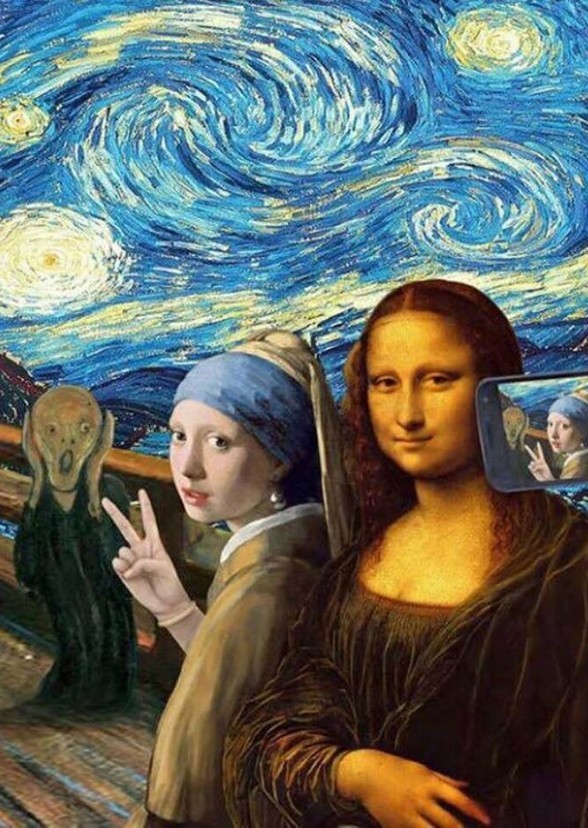
Let's cast artists from Michelangelo to Rauschenberg.
Masterpiece
Let's cast art from Michelangelo to Rauschenberg.

As You Like It
The play is set in a duchy in France, but most of the action takes place in a location called the Forest of Arden. This may be intended as the Ardennes, a forested region covering an area located in southeast Belgium, western Luxembourg and northeastern France, or Arden, Warwickshire, near Shakespeare's home town, which was the ancestral origin of his mother's family—who incidentally were called Arden. Frederick has usurped the duchy and exiled his older brother, Duke Senior. Duke Senior's daughter, Rosalind, has been permitted to remain at court because she is the closest friend and cousin of Frederick's only child, Celia. Orlando, a young gentleman of the kingdom who at first sight has fallen in love with Rosalind, is forced to flee his home after being persecuted by his older brother, Oliver. Frederick becomes angry and banishes Rosalind from court. Celia and Rosalind decide to flee together accompanied by the court fool, Touchstone, with Rosalind disguised as a young man and Celia disguised as a poor lady.

Just A Dream
While at a shopping trip, Alice Hendrix witnesses the end of the world. She watches as the world as she knows it disappears being over run by a sort of zombie vampire creature. After losing everyone she loves, Alice is desperate to find some sort of solution. Will a family secret not only provide a method to kill the creatures but also a possibility that these creatures and humans can coexist? With the main point of view being Alice but branching out later to a couple story lines. There is a love triangle/square. This was a series of dreams I had that I'm working through.

Sense and Sensibility
Marianne Dashwood wears her heart on her sleeve, and when she falls in love with the dashing but unsuitable John Willoughby she ignores her sister Elinor's warning that her impulsive behaviour leaves her open to gossip and innuendo. Meanwhile Elinor, always sensitive to social convention, is struggling to conceal her own romantic disappointment, even from those closest to her. Through their parallel experience of love—and its threatened loss—the sisters learn that sense must mix with sensibility if they are to find personal happiness in a society where status and money govern the rules of love.
Cymbeline
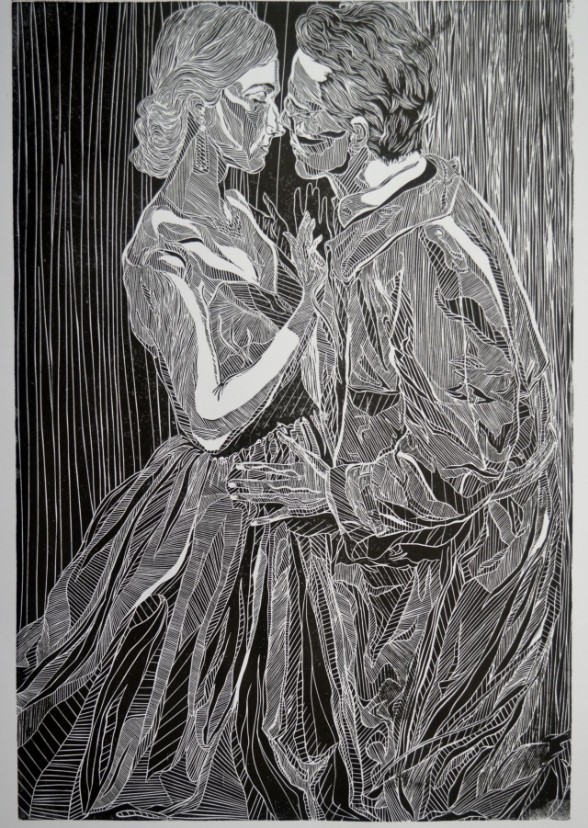
Cymbeline, the Roman Empire's vassal king of Britain, once had two sons, Guiderius and Arvirargus, but they were stolen twenty years earlier as infants by an exiled traitor named Belarius. Cymbeline discovers that his only child left, his daughter Imogen (or Innogen), has secretly married her lover Posthumus Leonatus, a member of Cymbeline's court. The lovers have exchanged jewellery as tokens: Imogen with a bracelet, and Posthumus with a ring. Cymbeline dismisses the marriage and banishes Posthumus since Imogen — as Cymbeline's only child — must produce a fully royal-blooded heir to succeed to the British throne. In the meantime, Cymbeline's Queen is conspiring to have Cloten (her cloddish and arrogant son by an earlier marriage) married to Imogen to secure her bloodline. The Queen is also plotting to murder both Imogen and Cymbeline, procuring what she believes to be deadly poison from the court doctor. The doctor, Cornelius, is suspicious and switches the poison with a harmless sleeping potion. The Queen passes the "poison" along to Pisanio, Posthumus and Imogen's loving servant — the latter is led to believe it is a medicinal drug. No longer able to be with her banished Posthumus, Imogen secludes herself in her chambers, away from Cloten's aggressive advances.

Robin Hood
Robin Hood is a legendary heroic outlaw originally depicted in English folklore and subsequently featured in literature and film. According to legend, he was a highly skilled archer and swordsman. In some versions of the legend, he is depicted as being of noble birth, and in modern retellings he is sometimes depicted as having fought in the Crusades before returning to England to find his lands taken by the Sheriff. In the oldest known versions he is instead a member of the yeoman class. Traditionally depicted dressed in Lincoln green, he is said to have robbed from the rich and given to the poor. Through retellings, additions, and variations, a body of familiar characters associated with Robin Hood has been created. These include his lover, Maid Marian, his band of outlaws, the Merry Men, and his chief opponent, the Sheriff of Nottingham. The Sheriff is often depicted as assisting Prince John in usurping the rightful but absent King Richard, to whom Robin Hood remains loyal. His partisanship of the common people and his hostility to the Sheriff of Nottingham are early recorded features of the legend, but his interest in the rightfulness of the king is not, and neither is his setting in the reign of Richard I. He became a popular folk figure in the Late Middle Ages, and the earliest known ballads featuring him are from the 15th century (1400s).

King Lear
Lear retires from the throne and decides to divide the kingdom among his three daughters. However, first, he puts them through a test by asking each of them to declare how much they love him. Eventually, he only subdivides his kingdom between two of his eldest daughters. The reason is that they show a relentless loyalty and love towards their father through superficial flattery. However, the last born daughter despises the phoniness of her sisters and refuses to pander to her father. In response, her father disowns and banishes her. She eventually marries the French king who later leads his army against her two sisters. Soon afterward, King Lear discovers that his elder daughter’s words were mere flattery done to attain power. Upon attaining wealth and land, he soon becomes a nuisance to his daughters who humiliate and discard him. Struck by disbelief that his beloved daughters do not truly love him, Lear starts losing his sanity. He escapes from his daughter’s houses and loiters upon a heath in the course of a great thunderstorm in the company of his fool as well as Kent, a secret nobleman who is loyal to him.

The Tempest
The Tempest is a play by William Shakespeare, probably written in 1610–1611, and thought to be one of the last plays that Shakespeare wrote alone. After the first scene, which takes place on a ship at sea during a tempest, the rest of the story is set on a remote island, where the sorcerer Prospero, a complex and contradictory character, lives with his daughter Miranda, and his two servants—Caliban, a savage monster figure, and Ariel, an airy spirit. The play contains music and songs that evoke the spirit of enchantment on the island. It explores many themes, including magic, betrayal, revenge, and family. In Act IV, a wedding masque serves as a play-within-the play, and contributes spectacle, allegory, and elevated language. Though The Tempest is listed in the First Folio as the first of Shakespeare's comedies, it deals with both tragic and comic themes, and modern criticism has created a category of romance for this and others of Shakespeare's late plays. The Tempest has been put to varied interpretations—from those that see it as a fable of art and creation, with Prospero representing Shakespeare, and Prospero's renunciation of magic signaling Shakespeare's farewell to the stage, to interpretations that consider it an allegory of Europeans colonizing foreign lands.

Miraculous Ladybug
In modern-day Paris, teenagers Marinette Dupain-Cheng and Adrien Agreste transform into superheroes when evil arises. Marinette transforms into her superhero persona, Ladybug, while Adrien transforms into his superhero persona, Cat Noir, using magical jeweled objects known as the Miraculous. Not knowing each others' true identities, the two work together to protect Paris from the mysterious villain, Hawk Moth, who covets and attempts to steal their powers by using his akuma, butterflies infused with negative energy, to transform Paris' everyday citizens into supervillains through a negative emotion that they have recently felt or are feeling. The first season ends with Marinette meeting Master Fu, the Guardian of the Miraculous, the man who gave Marinette and Adrien their Miraculous. The second season opens with Hawk Moth's identity being revealed as none other than Gabriel Agreste. This season also sees Marinette under Fu's tutelage, learning about the Miraculous. Circumstance requires Marinette to loan various Miraculous to friends and allies to fight some supervillains for temporary purposes. These 3 allied heroes are called back at the season's end when Hawk Moth manages to traumatize over two dozen civilians. The heroes are victorious, but Hawk Moth manages to escape with the aid of the Peacock Miraculous holder, Mayura, Gabriel's assistant, Nathalie.

The Fountain of Fair Fortune
There is an enchanted and enclosed garden that is protected by "strong magic." Once a year, an "unfortunate" is allowed the opportunity to find their way to the Fountain, to bathe in the water, and win "fair fortune forever more." Knowing that this may be the only chance to truly turn their lives around, people (with magical powers and without) travel from the far reaches of the kingdom to try and gain entrance to the garden. It is here that three witches meet and share their tales of woe. First is Asha, "sick of a malady no Healer... could cure," who hopes the Fountain can restore her health. The second is Altheda, who was robbed and humiliated by a sorcerer. She hopes the Fountain will relieve her feelings of helplessness and her poverty. The third witch, Amata, was deserted by her beloved, and hopes the Fountain will help cure her "grief and longing."

The Merchant of Venice
Antonio, an antisemitic merchant, takes a loan from the Jew Shylock to help his friend to court Portia. Antonio can't repay the loan, and without mercy, Shylock demands a pound of his flesh. The heiress Portia, now the wife of Antonio's friend, dresses as a lawyer and saves Antonio.

DC
Just for fun, for whatever it might one day be, who do you really want to play who

Marvel
Just for fun, for whatever it might one day be, who do you really want to play who (no x-men please if you wantto do the x-men I have a different story, there is some grey* area and that I understand, I just want to keep it as organized and without duplicates as possible) *grey, do you get it

Romeo and Juliet
Romeo and Juliet is a tragedy written by William Shakespeare early in his career about two young star-crossed lovers whose deaths ultimately reconcile their feuding families. It was among Shakespeare's most popular plays during his lifetime and along with Hamlet, is one of his most frequently performed plays. Today, the title characters are regarded as archetypal young lovers.

X-Men
Just for fun, who do you think should play who.