4,821 stories

Medea
Medea Aetes, 38, a brilliant pharmacologist from Georgia, left everything behind to build a life in Portugal with Jason Aeson, 41, a charming consultant whose career rose on her research. They have two sons, Mermeros, 9, and Pheres, 7. When Jason announces his engagement to Glauke, 24, the daughter of the powerful minister Kreon Mourão, 62, Medea is to be quietly removed: a visa that will not be renewed, a custody case she cannot win. Her fury is not hysteria; it is a mind of extraordinary power reasoning its way, step by step, into catastrophe. Aegeus, 66, a visiting academic, offers her refuge. The series follows Euripides with fidelity to the tragedy's shape and treats its catastrophe with restraint, entirely off-screen, focusing on the long road that leads there.

The Archipelago Hotel
Elin Lindqvist, 34, a poised and watchful hotel manager, returns to the Archipelago Hotel, her family's grand 1912 resort on a Stockholm island, to take over from her ailing father. At the midsummer festival, a guest disappears without a trace. Each season, the hotel hosts a new set of visitors and a new mystery, solved by Elin with the help of a local police detective and a retired concierge who remembers everything. The series blends elegant Nordic crime with a family drama about inheritance, loyalty and the secrets a house holds in its walls. The light is long, the interiors are cool and precise, and the dress at the midsummer ball is always the moment a season's truth comes out.

Hemline
Dilys Marlowe, 28, a seamstress from Cardiff, arrives in Swinging London with a pair of scissors and a radical idea: shorter. Working for the grand, traditional couturière Madame Odile Fournier, 62, she secretly cuts a dress that stops well above the knee. Photographer Terry Blake, 31, shoots it for a magazine, and overnight the city is talking. Department-store owner Alistair Crane, 52, wants to buy her design and her name; the old guard wants to destroy it. The musical follows Dilys's rise: the first boutique, the first scandal, the first runway. It is a bright, witty, fashion-forward period musical about invention, ambition and who gets credit for an idea.

The Auction House
Adira Mizrahi, 40, is the head of Old Masters at Sterling & Hale, London's grandest auction house. Three days before the season's blockbuster sale, a long-lost portrait attributed to a Renaissance master surfaces, valued at sixty million pounds. Adira's instincts tell her something is wrong, but the firm, its chairman Sir Edmund Hale, and a hungry collector, Victor Kessler, have too much invested to ask. Forensic evidence points to a forger, Daniel Roth, 43, with whom she has a complicated past. As the sale approaches, she must prove the fake without destroying her career or being silenced. The film is a polished, escalating thriller in marble salerooms, restoration labs and Mayfair dinner parties, with a final auction scene played as a live-wire duel.

Cassandra
Cassandra Priam, 33, is the lead safety researcher at Ilium, a San Francisco AI company founded by her father, Priam. Years ago, charismatic investor Apollo Delos funded her research, and expected something in return. When she refused him, the funding stayed but the credibility did not: her warnings are now dismissed as 'difficult.' She is right. A flagship system will fail catastrophically, and the failure has a date. Her brother Hector, 36, the company's loyal chief engineer, wants to believe her but cannot afford to. Her other brother Paris, 29, has his own plans. Six episodes follow Cassandra as she documents, warns, escalates, and is ignored at every level, until the failure comes exactly as predicted. The series is a study of institutional deafness, and it ends, like the myth, with the fall.

The Road Home
Arta Berisha, 30, is a London-born pop star of Kosovar-Albanian descent, polished, global and quietly homesick for a place she has barely visited. When her grandmother Fatime, 79, announces she is selling the family house in a mountain village, Arta flies out to help and stays for the summer festival. Her manager, Mark Ellison, 48, pushes her to turn the trip into a PR event. Instead, Arta finds her cousin Dritan, 36, who still runs the family farm; Besnik Krasniqi, 33, a gifted folk musician who teaches her the old songs; and a grandmother with a story she has never told. The musical is a warm, funny, respectfully told story of diaspora, language and belonging, with traditional and pop music woven together.

Midnight in Lisbon
Noa Carmel, 38, is a Hebrew-English-Portuguese conference interpreter whose job is to be invisible, carrying other people's words without leaving a trace of her own. She arrives in Lisbon for a three-day summit, a quiet break after a painful divorce. She meets Tomás Almeida, 41, an architect restoring a crumbling 18th-century palace, who asks her to translate a stack of old letters he has found in the walls. The letters tell a century-old love story. As Noa reads them aloud over three nights, streetcars, rooftops and fado houses, she starts to hear her own story in them. The film is slow, sun-warmed and literate: a romance told in translation, ending on a rooftop at dawn.

Penelope: The Loom
Penelope Anagnos, 44, runs Ithaca Maritime, the shipping company her husband Odysseus, 49, built. He vanished on a voyage nine years ago and has been declared lost. Now the board and a ring of aggressive investors, led by the charming and predatory Antinoos Kallis, circle the company and her, demanding she declare herself a widow, sell, and move on. Penelope's answer is strategic delay: every morning she approves a new restructuring plan, and every night she quietly unpicks it, buying time. Her son Telemachos, 22, returns from abroad to find his mother outnumbered. Aided by Eumaios, the old harbourmaster, and Eurykleia, the family's 74-year-old housekeeper, Penelope holds the island together until a ragged stranger named Nikos arrives from the sea. The series follows the Odyssey's homecoming with fidelity, including the test of the bed.

Neon Cathedral
Mira Kelmendi, 29, the London-born daughter of Albanian immigrants, runs Neon Cathedral, a legendary East End nightclub converted from a deconsecrated church. When developer Jules Whitmore offers to buy the building for luxury flats, the club has one summer to find the money or close. Mira turns to the community that made the place: dancers, bar staff, a retired church custodian, and her own mother, who cleans the club at dawn and has never once been inside at night. DJ Danny Osei, 31, offers her a series of final-night events that could save it, and a partnership that might be more. The show is a big, bright dance-pop musical about a room that belongs to everyone, and about what a community owes the place that held it.

The Riviera Job
Talia Ben-Ami, 36, is the most respected jewelry-security consultant on the Côte d'Azur. When the legendary Rinaldi Parure, a necklace worth forty million euros, is displayed at a Monaco charity gala, she is hired to guard it. Charming insurance investigator Julien Marchetti, 40, suspects the necklace is about to be stolen, and suspects Talia knows how. He is right. A veteran thief called Fox has asked her to help him steal the necklace from the one person who deserves it least. Across a glittering week of casino nights, yachts and hairpin roads, Talia and Julien circle each other as allies, suspects and something more. The film is a classic caper: charm, misdirection and a final reveal that reframes every scene.

Antigone: The Burial
Detroit, after a night of protest and fire. Polynikos Labdakis, 29, a community organizer, is killed in the unrest and the city, under Mayor Kreon Vlahos, declares him responsible for the fire that destroyed a block. The mayor's order is absolute: the body stays in county custody, no funeral, no public mourning. His sister Antigone, 24, a hospital chaplain's assistant, decides to bury him anyway, knowing exactly what it will cost. Her sister Ismene, 27, begs her to obey. Kreon's own son Haemon, 26, is engaged to Antigone and must choose between his father and the woman he loves. The series follows Sophocles with strict fidelity: the argument between civic law and sacred obligation, the blind prophet's warning, Kreon's too-late change of heart, and the chain of losses that follows his stubbornness.

Roswell High
Max Evans, his sister Isabel, and their friend Michael Guerin appear to be human but are in reality the survivors of the 1947 UFO. Upon emerging from stasis pods, they appeared to be 7-year-old orphaned humans. Max and Isabel are adopted by a loving pair of attorneys, the Evans. Michael entered the foster care system, bouncing from household to household with lots of families rejecting him. The aliens have special powers, including the ability to: rearrange molecules (change objects, heal injuries). "dreamwalk" (observe, participate in, and manipulate others' dreams). sense each other's emotions from afar. create psychic connections that allow the alien to see into another's mind. perceive colorful halos or auras around humans that indicate emotional state. Max, Isabel, and Michael have successfully kept their true nature a secret for a decade. The series begins with the accidental shooting of Liz Ortecho, a human friend of Max's. He cannot bear to see her die and risks bringing attention to himself when he uses his powers to save her life. Liz is soon let in on the secret, as are her friends Maria DeLuca and Alex Manes. The six teens quickly bond and learn to trust one another, and Max and Liz fall deeply in love, and Michael and Maria fall in love. Together the group fends off the suspicions of law enforcement and alien hunters while seeking clues about the aliens' origins.

The Secret Circle: The Initiation
The Circle's Power has Lured Her Home . . . Cassie must confront a shattering challenge: an ordeal that could cost her life or gain her more than she's ever imagined . . . Charmed by the Secret Circle, she's initiated into the mysterious "in crowd," a coven of young witches whose power has controlled New Salem for three hundred years. Hopelessly in love with the coven leader's boyfriend, Cassie risks falling prey to dark powers in order to have him. But if she does, her endless love could destroy the coven, New Salem, and her! . . . And She Will Emerge the Leader or Perish!

House of Night: Marked
Enter the dark, magical world of the House of Night, a world very much like our own, except here vampyres have always existed. Sixteen-year-old Zoey Redbird has just been Marked as a fledgling vampyre and joins the House of Night, a school where she will train to become an adult vampyre. That is, if she makes it through the Change - and not all of those who are Marked do. It sucks to begin a new life, especially away from her friends, and on top of that, Zoey is no average fledgling. She has been chosen as special by the vampyre Goddess Nyx. Zoey discovers she has amazing powers, but along with her powers come bloodlust and an unfortunate ability to Imprint her human ex-boyfriend. To add to her stress, she is not the only fledgling at the House of Night with special powers: When she discovers that the leader of the Dark Daughters, the school's most elite group, is misusing her Goddess-given gifts, Zoey must look deep within herself for the courage to embrace her destiny - with a little help from her new vampyre friends.

Victorious: The Next Ensemble
A decade and a half after graduating, Hollywood Arts High School opens its doors to a new generation of wildly talented, eccentric teens—the children of the original Hollywood Arts crew. Between viral chaos, high-stakes performing, and teen drama, this new group must carve out their own path while navigating the lingering rivalries and romances of their famous parents.

Felicity
The series opens at Felicity's high school graduation, where she asks Ben Covington, a classmate on whom she has a crush, to sign her yearbook. Moved by his comment that he wished they had gotten to know each other further, she changes her education plans completely, deciding to follow Ben to New York rather than attend Stanford University as a pre-med student. Felicity's overbearing parents, concerned about Felicity's seemingly rash decision, come to New York to try to persuade her to return home and "get back on track". Felicity has second thoughts about her decision, but soon realizes that she came not only to follow Ben, but to discover her true inner self.

Agatha Christie's Poirot

Supernatural
In their childhood, Sam and Dean Winchester lose their mother Mary to a mysterious supernatural creature, prompting their father John to raise them as hunters to track the creature. The first three seasons focus on the brothers' lives as hunters on the road, beginning with their search for their missing father. Sam is studying at Stanford University with his girlfriend Jessica until she is killed in the same way as his mother. He then leaves school and joins Dean; they travel around the United States hunting monsters, ghosts, demons, and other supernatural beings which are often drawn from folklore and urban legends.
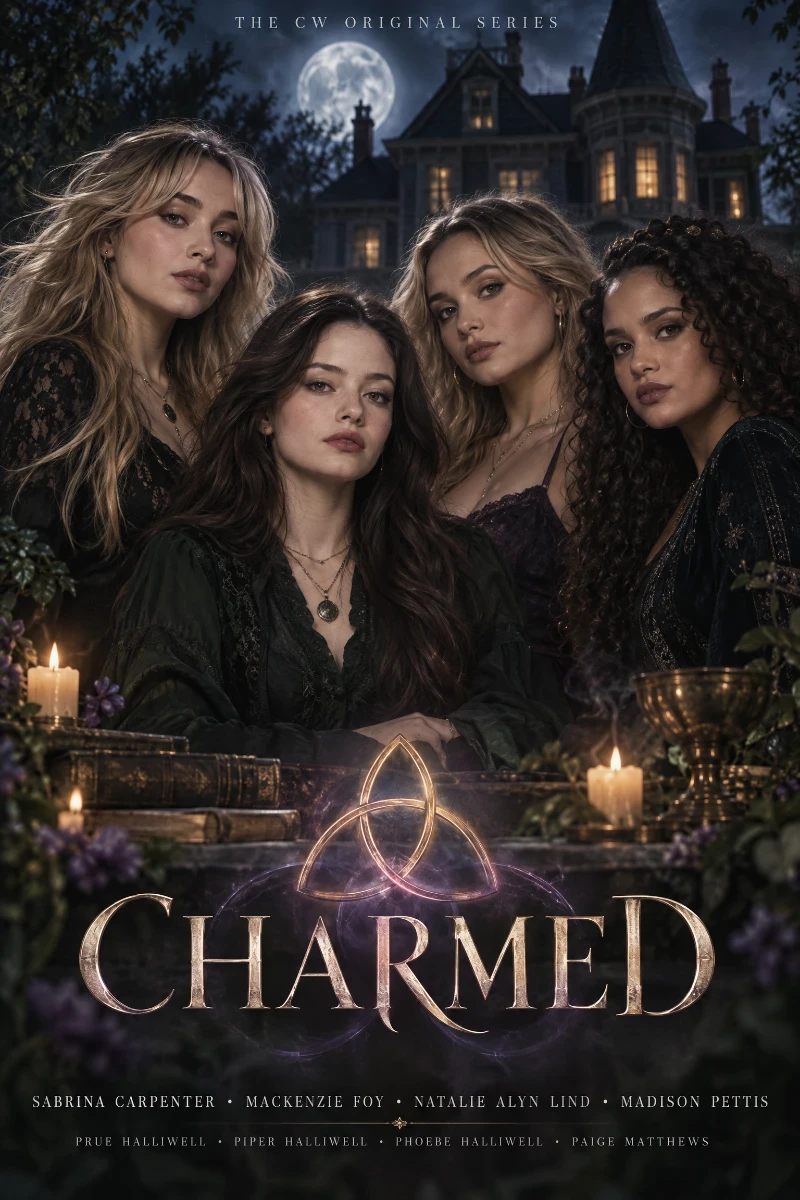
Charmed
The series starts in when Phoebe Halliwell returns from New York and moves back into the family's Halliwell Manor in San Francisco to live with her sisters Prue and Piper. When Phoebe discovers the family's Book of Shadows in the attic, she learns that she and her sisters are the most powerful witches ever known, destined to protect both innocents and the world at large from demons, warlocks, and other evil creatures. Phoebe, reasonably suspecting the book to be a novelty, reads its initial inscription—unaware that it also happens to be an incantation activating the sisters' supernatural powers once all three are reunited in their ancestral home.

Angel
The series focuses on Angel, an Irish vampire who is over 240 years old. Angel was known as Angelus during his rampages across Europe, but was cursed with a soul, which gave him a conscience and guilt for centuries of murder and torture. He left Buffy the Vampire Slayer at the end of season 3 to move to Los Angeles in search of redemption.