

Stories by @mr95
4,807 stories

The North Remembers
After the events of Iron Throne, the Northern political bloc has been seized by the Bolton faction — a former Stark ally that has turned collaborator. Roose Bolton now governs the North under Lannister authority. His son Ramsay runs the enforcement operation with a sadism the father finds useful and occasionally excessive. Sansa Stark, believed dead by the capital, is alive and hidden — and moving, slowly and carefully, toward the people and the pieces she will need to take the North back. Theon Greyjoy, imprisoned and broken by Ramsay's operation, has to find what remains of who he was. This is a series about what survival costs, what identity survives, and what it means to come home.

The Sand & The Stone
Two of the world's most powerful regional dynasties — House Martell of Sunspear and House Tyrell of Highgarden — have operated in a careful, armed détente for a generation. The Martells deal in intelligence, territory, and unresolved vengeance against the Lannister family for the death of Princess Elia a decade ago. The Tyrells deal in food, finance, and political influence, and are currently deciding who in Washington to back. When Oberyn Martell, the family's most dangerous diplomat, is sent to the capital on a diplomatic mission that is actually an assassination contract, and Margaery Tyrell begins her calculated ascent through the political heir's social circle, both families' plans begin to intersect with lethal results.

Red Harbour
Red Harbour follows two intertwining stories in the labyrinthine city of Venice. Arya Stark, now seventeen and separated from her family by the events of Iron Throne, arrives in the city with nothing but a name and a list. She is taken in by the House of Black and White — an ancient, secretive guild of assassins known in financial and intelligence circles as the Faceless Men. Her trainer, Jaqen H'ghar, teaches her that identity is a weapon. Concurrently, the Iron Bank of Braavos — Venice's most powerful private financial institution — begins calling in debts that several major powers owe, triggering a global crisis managed by the bank's enigmatic representative Tycho Nestoris.
Dragon's Blood
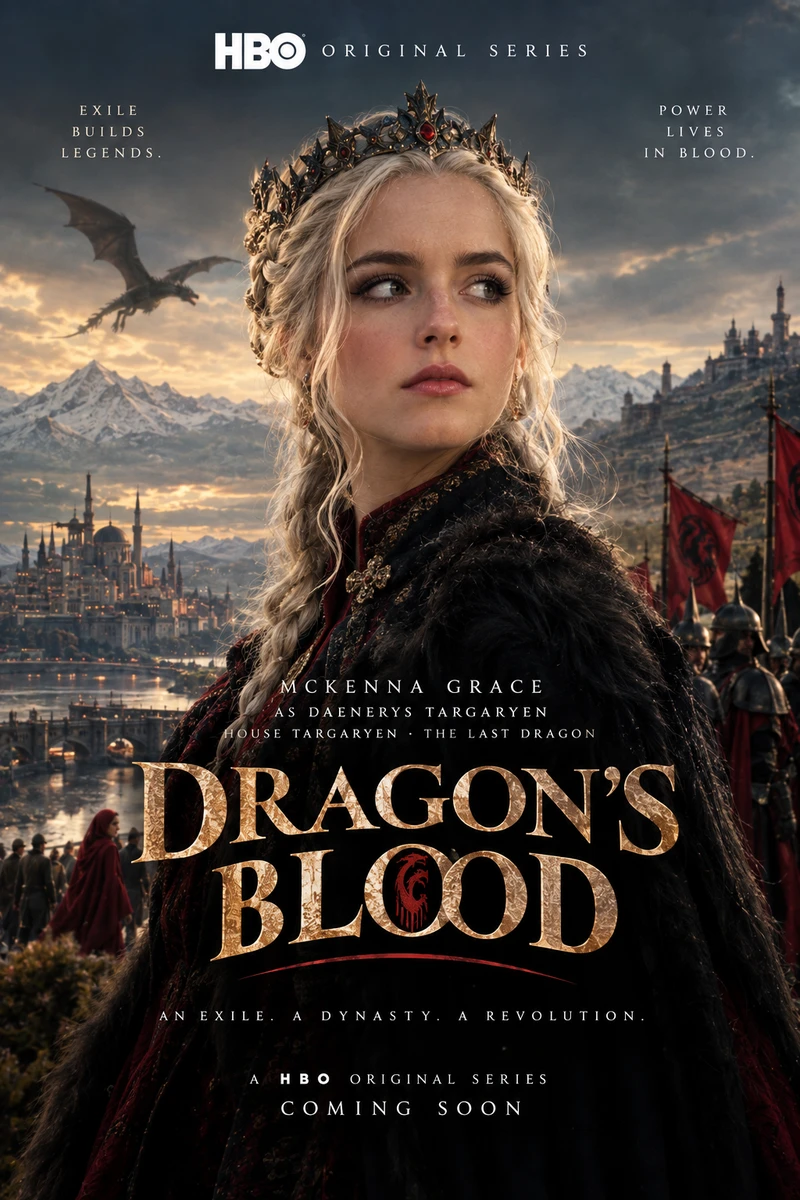
Daenerys Targaryen was born in exile — the last surviving child of a deposed dynasty, raised across four countries by a brother who has weaponized their legacy into an obsession. At seventeen, Viserys sells her into a political marriage with Khal Drogo, the most powerful warlord in the Central Asian territories, in exchange for an army he intends to use to reclaim the country her father lost. Daenerys expects to survive the transaction. She does not expect to build something from it. Over three continents and four years, she acquires what she was sold away from: authority, loyalty, and a small but growing empire of freed people who have decided she is worth following. The question is what she does when she arrives.

The Wall
The Night's Watch is a federal border force stationed at The Wall — an enormous, aging fortification across the northern frontier. They are understaffed, under-resourced, and increasingly convinced that the intelligence coming out of the territories beyond is not about human migration. It is about something else. Commander Jeor Mormont runs the Watch with the discipline of a man who knows his government has stopped listening to him. His second, Jon Snow, reassigned here from a political posting he didn't ask for, begins to build relationships across the Wall that will force the country to reckon with a threat it has refused to name. The White Walkers are not a myth. They are a movement. And they are organized.
Iron Throne
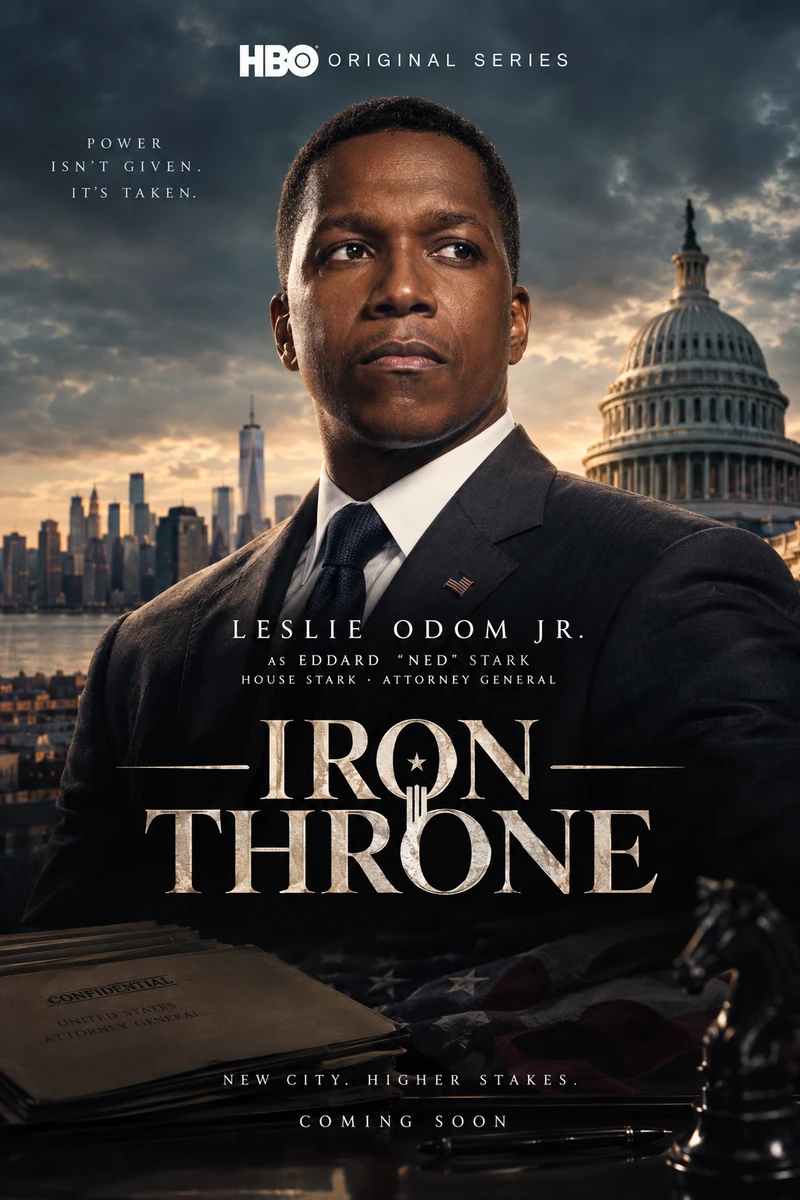
The Stark family has governed the Northern political bloc for three generations — stoic, principled, and fiercely loyal to the law. When President Robert Baratheon, the Starks' oldest ally, dies under suspicious circumstances mid-term, the Vice President's seat — the Iron Throne of Washington — falls into a contested succession. Eddard "Ned" Stark, the country's most trusted Attorney General, is pulled from his Northern stronghold to serve. What he finds in Washington is not a government — it is a court, and the Lannisters have owned it for years. The Starks do not know how to play this game. The Lannisters have never played anything else.
The Park
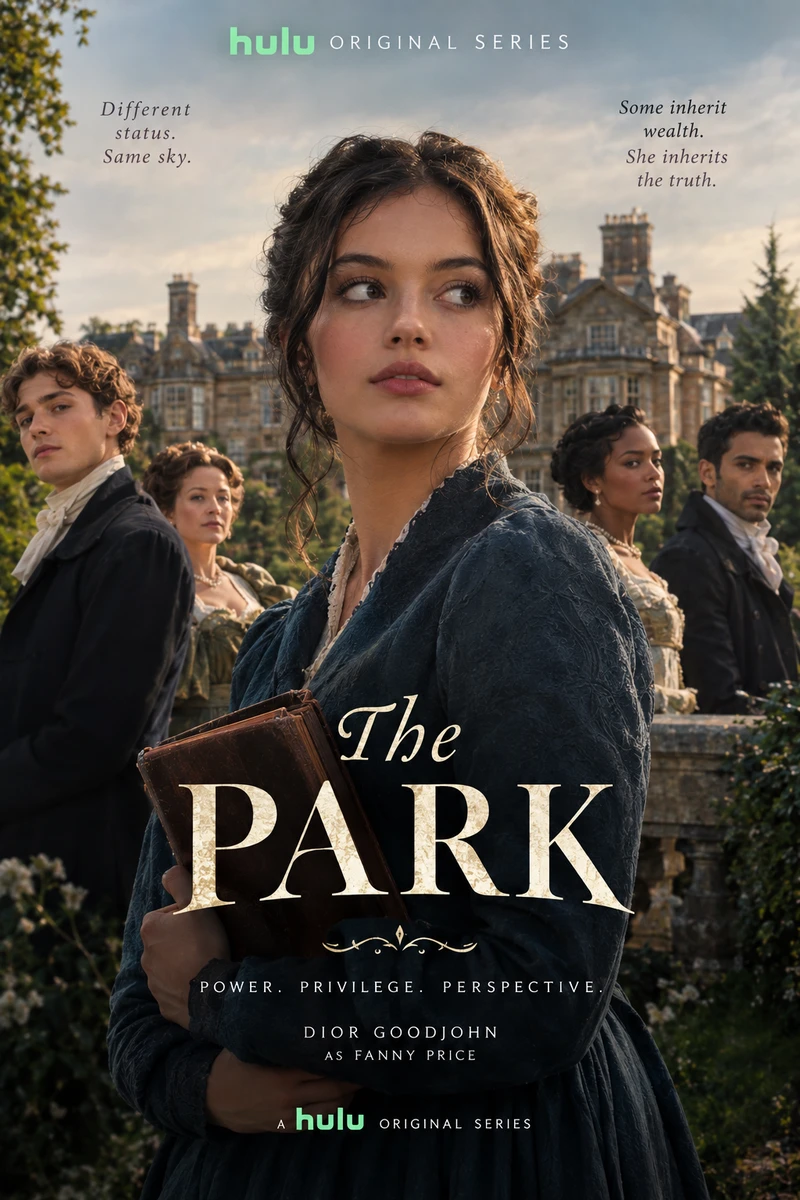
At ten years old, Fanny Price was sent from her impoverished Portsmouth family to live with her wealthy aunt and uncle, the Bertrams, at Mansfield, their Connecticut estate. Now twenty, she is still — by design — the poor relation. Too grateful to object, too observant not to see everything, too principled to pretend. When the glamorous Crawford siblings arrive and the entire Bertram family begins to unravel under their influence, Fanny is the only one watching clearly. Edmund Bertram, the one cousin who has always treated her as a person, is falling for the brilliant, faithless Mary Crawford. Fanny is going to have to decide whether constancy is a virtue or just a wound she has learned to call one.

Northanger
Catherine Morland, seventeen and raised in rural Wiltshire on true crime podcasts and Gothic fiction, is invited to stay with the wealthy, strange Tilney family at Northanger, their renovated country estate. She is convinced — not entirely without evidence — that the family patriarch, General Tilney, is hiding something terrible about his late wife. Henry Tilney, his witty, infuriating younger son, keeps gently correcting her theories, which would be more useful if he were also being entirely honest about his own family.

Emma
Emma Woodhouse is twenty-one, extremely rich, extremely clever, and entirely too confident in her ability to manage other people's lives. In the wealthy Atlanta suburb of Highbury, she is the social sun everyone orbits. When her governess-companion leaves to get married, Emma takes up a project: transforming Harriet Smith, her sweet, uncertain new friend, into a match-ready social asset. She is going to be spectacularly, instructively wrong in every direction — about Harriet, about everyone around her, and most humiliatingly about herself and the one person who has known her well enough, for long enough, to see it happening in real time.

Persuasion
Anne Elliot was persuaded at 20 to end her engagement to Frederick Wentworth — a naval officer with no money and no family name — by a godmother she trusted and a family who needed saving. Eight years later, Frederick is a decorated naval veteran and marine conservationist with two bestselling books and a face that has been on magazine covers. Anne is a musicologist at the University of Edinburgh, still living in the orbit of her vain, debt-ridden family, still playing down everything she is. When Frederick returns as a visiting academic fellow, they are put repeatedly into the same rooms. He is not sure he has forgiven her. She is not sure she deserves to be.

Sense & Signal
When their father dies and his estate passes entirely to their half-brother under a disputed will, the Dashwood women — mother, Elinor, Marianne, and Margaret — are left with almost nothing and must move into a small house on the Oregon coast owned by a distant cousin. Elinor, the eldest, is a UX researcher who processes everything through analysis and spreadsheets and is very carefully not talking about the man she left behind in London. Marianne, her younger sister, is a composer and poet who has never once processed anything quietly in her life, and who is about to fall devastatingly for a man who does not deserve it.

First Impressions
The five Bennet sisters have been raised in a Prospect Heights brownstone their mother has been trying to leverage into a better ZIP code for twenty years. When a tech billionaire named Charles Bingley buys the warehouse across the street and converts it into a co-working space, he brings with him his best friend — Fitzwilliam Darcy, who has a face made for magazine covers and a manner made for lawsuits. Elizabeth Bennet, a freelance cultural critic with a newsletter nobody important reads yet, decides she hates him on sight. She is almost certainly wrong about that.

Here's Lucy
Here's Lucy

Charlie's Angels
Charlie's Angels

Antony and Cleopatra
He was the most powerful man in the world. She was the most extraordinary woman in it. Together they chose love over empire. History called it their defeat. Shakespeare called it something else. The most visually sumptuous film in the collection — set across the full visual contrast of Republican Rome (marble, severity, military order) and Ptolemaic Egypt (gold, heat, the specific overwhelming sensory world of Alexandria). Antony and Cleopatra is Shakespeare's most mature love tragedy — the story of two middle-aged people who are each extraordinary in their own world and who choose each other over everything else. The film treats their relationship with full complexity: it is real, it is political, it is strategic, it is also the most genuine thing either of them has ever experienced. Cleopatra's theatrical manipulation of Antony is not simply manipulation — it is the specific language of a woman who has never been allowed to be direct about anything she wants. Antony's abandonment of Roman duty is not simply weakness — it is the specific choice of someone who has finally found something worth more than empire. Act One — Alexandria Egypt in full. Cleopatra and Antony's world. The news from Rome. The specific luxury of a civilization that knows it is being absorbed. Act Two — Rome The marriage to Octavia. Antony's specific quality of being diminished by Rome's severity. The return to Egypt. Act Three — The Battle Actium. Cleopatra's ships withdrawing. Antony following. The military disaster and its aftermath. Act Four — The Monument Antony's death — mismanaged, painful, human. Cleopatra's death — chosen, precise, queenly. The asps. 'I am fire and air.' The ending that Shakespeare gives them instead of history's defeat.
Hamlet
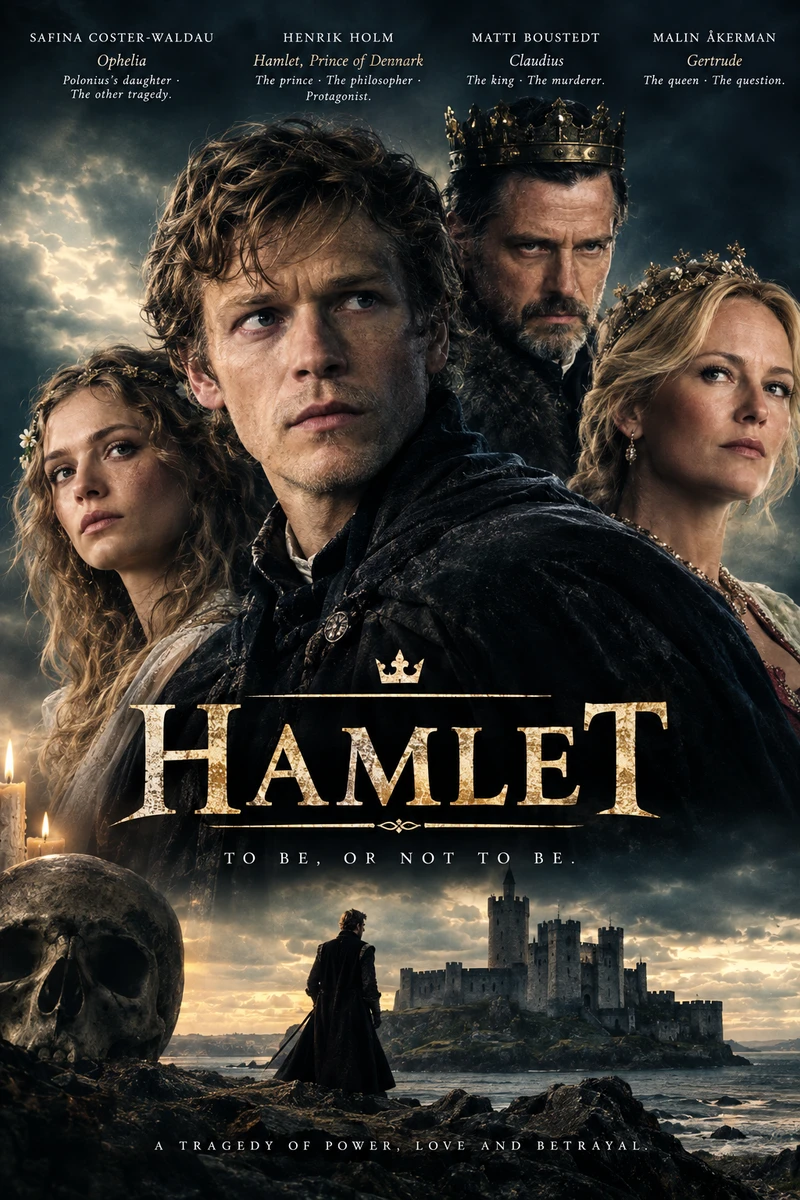
His father was murdered. His uncle did it. His uncle is now married to his mother and sitting on his father's throne. He knows. Nobody else does. He has to decide what to do with knowing. The fullest, most unabridged feature film adaptation of Hamlet ever produced — three hours and six minutes of Shakespeare's longest, most philosophically complex play given complete screen time. Every scene is present. Every soliloquy is filmed in a single unbroken take. The visual world: medieval Denmark rendered in cold light, grey stone, the specific claustrophobia of a court where everyone watches everyone. The film treats Hamlet as what he is — not simply a man paralyzed by indecision but a man whose extraordinary intelligence makes him unable to act without understanding everything, and who lives in a world where understanding everything has become impossible. The romantic relationship with Ophelia is given its full tragic weight. Gertrude's psychology — does she know? — is treated as the play's most deliberately unanswerable question. Act One — The Ghost The ghost's appearance and its accusation. Hamlet's response — not immediately 'To be or not to be' but the specific practical crisis of being told your father was murdered by your uncle who is now your stepfather. Act Two — The Play The 'Mousetrap' — the play within the play. Claudius's reaction. 'To be or not to be.' The Ophelia scene. The closet scene with Gertrude. Act Three — England and Return Hamlet's exile, Ophelia's madness, her death. Hamlet's return. 'The readiness is all.' Act Four — The Final Scene The poisoned swords. The poisoned cup. Everyone dying in one scene. Horatio's survival and its specific loneliness.
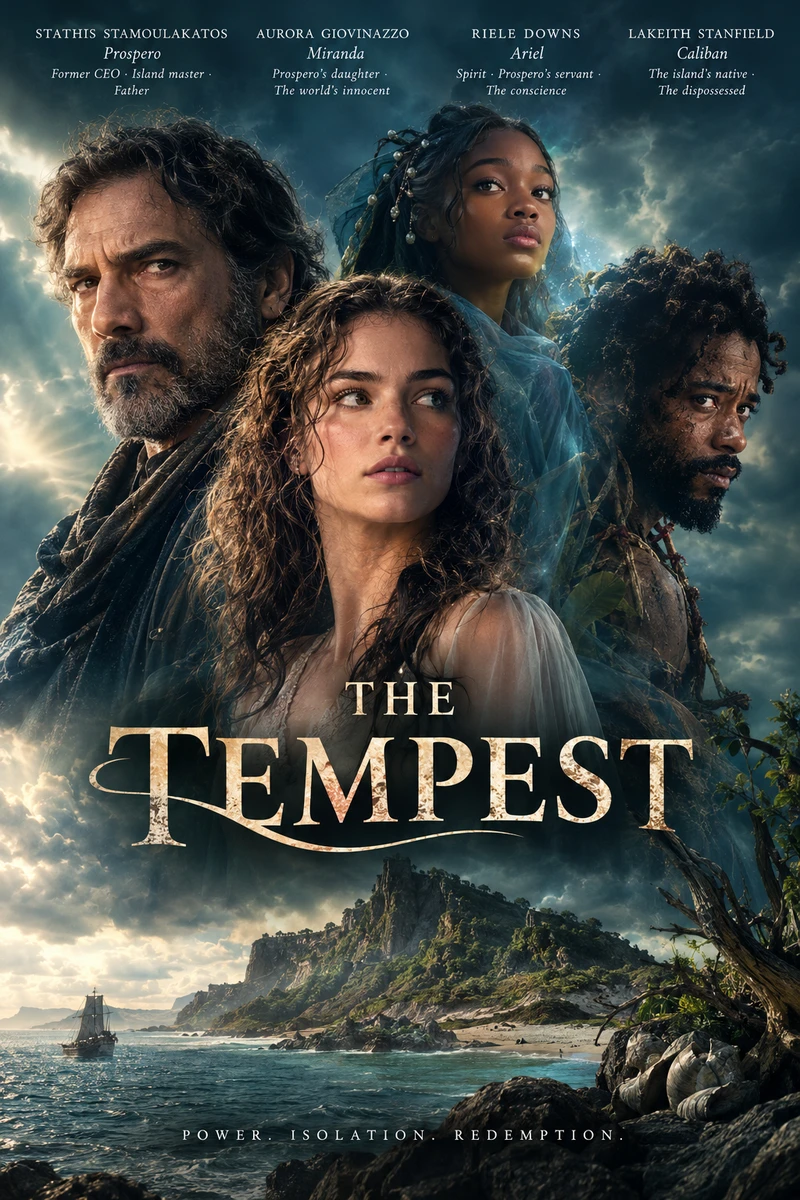
The Tempest
He was exiled from Milan twelve years ago. The island gave him powers he was not born with. His daughter was born on the island and has never seen another human being. A ship appears on the horizon. A contemporary reimagining of Shakespeare's most personal and most formally perfect late play — set on a remote island in the present day, Prospero as a former tech CEO whose company was seized by his brother in a boardroom coup twelve years ago. He has lived on the island ever since, developing what the play calls magic and the film contextualizes as an extraordinary command of the island's specific environmental and electronic systems (a very specific version of 'magic' that the film never entirely demystifies). His daughter Miranda has grown up on the island in complete isolation. When his brother's yacht appears in a storm, Prospero engineers its distress and the arrival of all the people who wronged him. The question is what he does with them now he has them. Act One — The Storm Prospero engineering the storm. The shipwreck. Miranda's first sight of other people. Act Two — The Island The survivors on different parts of the island. Ferdinand and Miranda's immediate connection. Caliban's conspiracy with the drunk butler. Act Three — The Choice Prospero's confrontation with his brother. The choice between revenge and forgiveness. Ariel's influence on that choice.
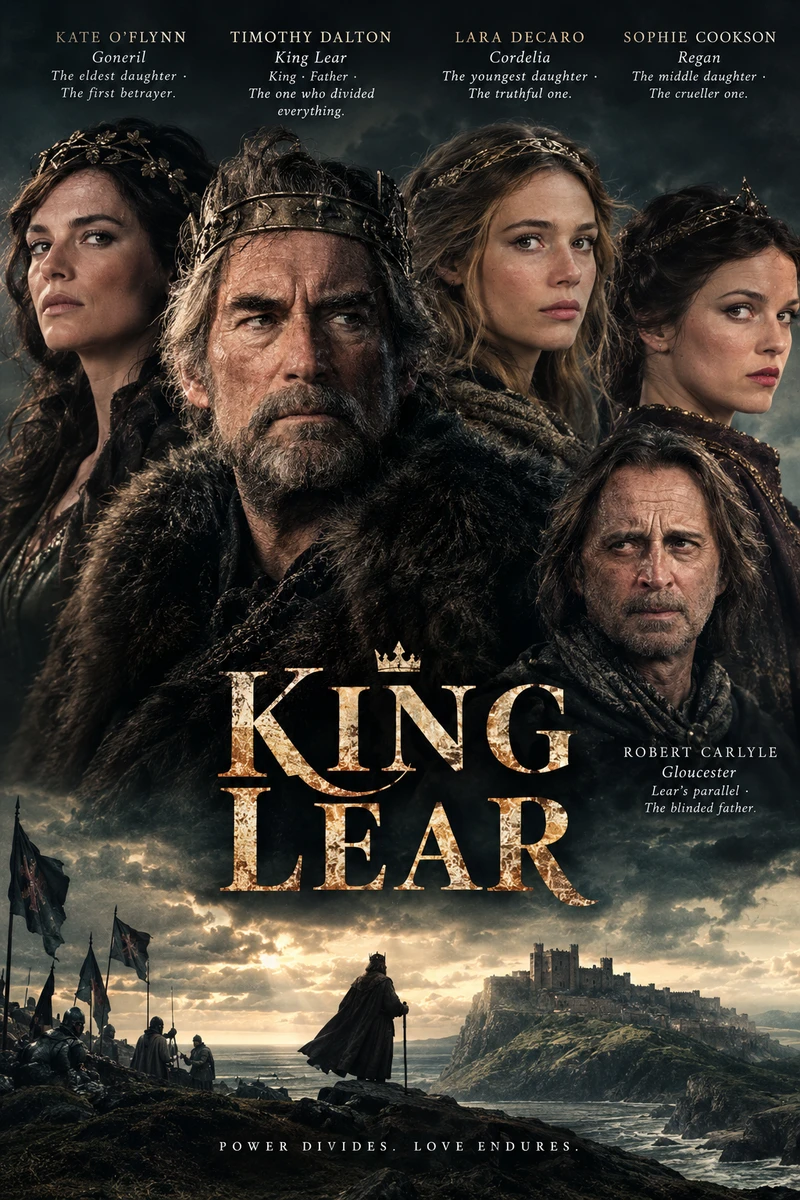
King Lear
He divided his kingdom between his daughters based on how much they said they loved him. Only one loved him too much to lie. He banished her. This is what followed. The fullest, most unsparing adaptation of King Lear — the play that many critics consider Shakespeare's greatest and his most demanding. Set in the mythic pre-Roman Britain of the text, rendered in the visual language of Iron Age Britain — wild, weathered, spectacular, stripped of romantic medieval softness. The film does not flinch from the play's darkness: this is the play in which a daughter dies for no reason except the specific cruelty of the world, in which an old man's eyes are gouged out on stage, in which goodness is not rewarded and evil is not satisfyingly punished. The storm scene is the film's centerpiece — shot on actual location, Lear genuinely in the rain for the sequence, the scene given its full forty minutes of screen time. Act One — The Division The court in its full power. The love-test. Cordelia's refusal. The banishment. The specific moment when everything begins to collapse. Act Two — The Storm Lear on the heath. The storm sequence — the film's central forty minutes. 'Blow, winds, and crack your cheeks.' Act Three — The Parallel Gloucester's betrayal, blinding, and Dover journey alongside Lear's madness. The film's most formally intricate section. Act Four — The Ending Cordelia's return. The reconciliation. The final battle. 'Never, never, never, never, never.'
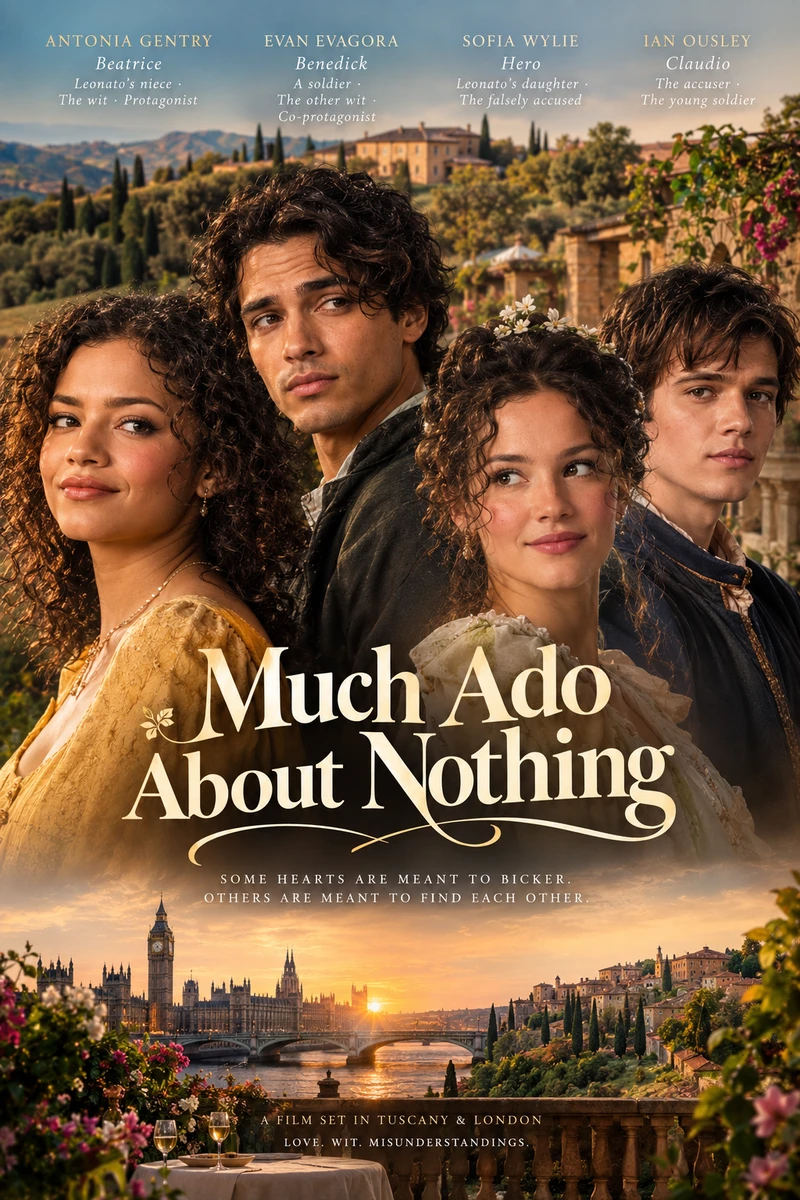
Much Ado About Nothing
Beatrice and Benedick have been arguing for three years. Everyone can see it is love. They are the last to know. The comedy is in watching them figure it out. A sun-drenched contemporary romantic comedy that treats Much Ado About Nothing as what it is — Shakespeare's most sophisticated examination of two people who are in love and refuse to admit it because they are both too intelligent and too proud. Set between contemporary Tuscany (where the play's opening scenes unfold at the villa of Leonato) and London (where the characters' shared history is established through brief flashback). The film follows Shakespeare's text with fidelity while giving the specific comedic world of the Tuscan summer sequence its full contemporary warmth. The Hero-Claudio plot — the play's more serious romantic thread — is treated with the full weight the text gives it: a woman falsely accused of sexual dishonesty on her wedding night is not simply a plot convenience but the film's moral test. Act One — The Villa Messina in Tuscany. The soldiers arriving. Beatrice and Benedick's first exchange — the film's first great scene. Act Two — The Gulling The double deception — each told the other is secretly in love with them. Benedick's soliloquy in the garden. Beatrice overhearing in the orchard. Act Three — The Wedding Hero's public accusation. Beatrice's 'Kill Claudio.' The film's pivot from comedy to something much more serious. Act Four — The Resolution Hero's vindication. The second wedding. Beatrice and Benedick's final, grudging, joyful capitulation.
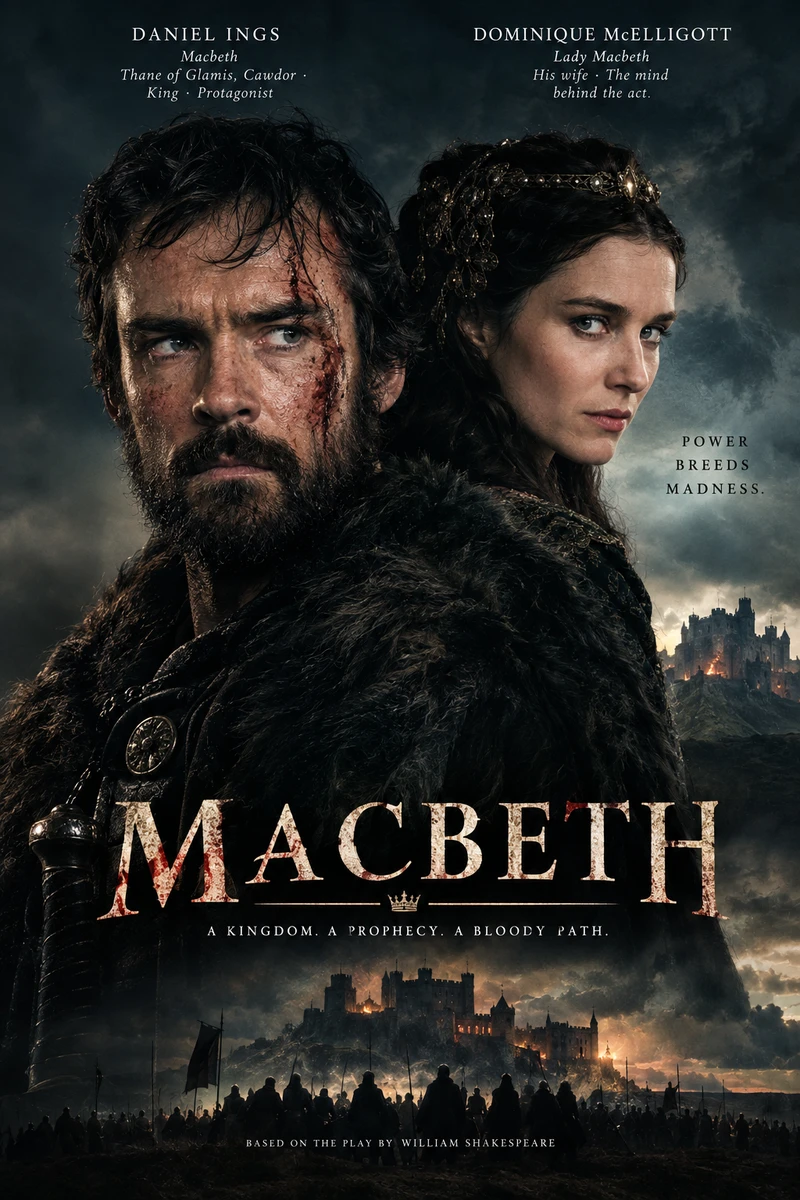
Macbeth
He was the greatest warrior in Scotland. She was the sharpest mind in his castle. Together they committed the one act that cost them everything — including each other. A period production of Shakespeare's most compressed and most terrifying tragedy — set in the specific historical world of medieval Scotland with full atmospheric commitment to the play's darkness. The film treats the Macbeth-Lady Macbeth relationship as the specific partnership it is: two extraordinarily capable people who make a decision together and are destroyed by it separately, at different rates, in different ways. Lady Macbeth's psychological dissolution is given equal screen time to Macbeth's political paranoia. The Weird Sisters are treated neither as theatrical convenience nor supernatural certainty — they are ambiguous, possibly internal, possibly external, and the film refuses to decide. The visual language: grey, wet, dark — Scotland in the specific light of a kingdom eating itself. Act One — The Prophecy The battlefield. The witches. Macbeth's first private response to the prophecy — the film's most important single shot. Duncan's arrival at Inverness. Act Two — The Act Duncan's murder. Lady Macbeth's management of the aftermath. Macbeth's hands. The knocking at the gate. Act Three — The Dissolution The banquet. Banquo's ghost. Lady Macbeth's sleepwalking. Macbeth's increasingly isolated paranoia. Act Four — The End Birnam Wood moving. Lady Macbeth's death. Macbeth's last battle and his specific dignity in facing it.