

Stories by @the2ndmememan
16 stories

Donkey Kong Country 2: Diddy Kong’s Quest
The story revolves around Diddy Kong and his girlfriend, Dixie Kong, who try to rescue Donkey Kong after he is abducted by King K. Rool. The game is set on Crocodile Isle, with eight worlds of varying environments, totaling 52 levels. The game utilises the same Silicon Graphics (SGI) technology from the original, which features the use of pre-rendered 3D imagery. Diddy's Kong Quest received critical acclaim, being widely regarded as one of the greatest 2D platformers ever made. Praise was directed at its graphics, gameplay, and soundtrack. It was the second best-selling game of 1995, the sixth best-selling game on the SNES, and the highest selling SNES title to not be packaged with the system.

Metroid 2: Prime
Metroid Prime is a first-person action-adventure video game developed by Retro Studios and Nintendo for the GameCube video game console.[1] It was released in North America on November 17, 2002, and in Japan and Europe the following year. Metroid Prime is the fifth main installment in the Metroid series, and the first Metroid game to use 3D computer graphics. Because exploration takes precedence over combat, Nintendo classifies the game as a first-person adventure rather than a first-person shooter.[2] On the same day as its North American release, Nintendo also released the Game Boy Advance game Metroid Fusion, marking the return of the Metroid series after an eight-year hiatus following Super Metroid (1994). Metroid Prime is the first of the three-part Prime storyline, which takes place between the original Metroid and Metroid II: Return of Samus.[5][6] Like previous games in the series, Metroid Prime has a science fiction setting in which players control the bounty hunter Samus Aran. The story follows Samus as she battles the Space Pirates and their biological experiments on the planet Tallon IV. The game was a collaboration between Retro's staff in Austin, Texas, and Japanese Nintendo employees, including producer Shigeru Miyamoto, who suggested the project after visiting Retro's headquarters in 2000. ]

Star Fox 2: 64
Star Fox 64,[a] known in the PAL region as Lylat Wars, is a 3D scrolling shooter game themed around aircraft combat for the Nintendo 64 video game console. It is a reboot of the original Star Fox,[2] and the only game in the Star Fox series to be released on the Nintendo 64. An autostereoscopic remake, titled Star Fox 64 3D, was released for the Nintendo 3DS in 2011. Star Fox 64 was the first Nintendo 64 game to have included support for the Rumble Pak, with which it initially came bundled.[3] The game has sold over 4 million copies since its release, making it one of the best-selling games on the system. The game received critical acclaim for its precise controls, multiplayer modes, voice acting and use of multiple gameplay paths. It has been deemed by many critics and gamers to be one of the best video games of all time.

Super Mario Bros. 2: Sunshine
Super Mario Sunshine[a] is a 3D platform game developed and published by Nintendo for the GameCube. It was first released in Japan on July 19, 2002, and was later released in North America, Europe and Australia. It is the second 3D platformer in the Super Mario series, following Super Mario 64 in 1996. The game takes place on the tropical Isle Delfino, where Mario, Toadsworth, Princess Peach and five Toads are taking a vacation. A villain resembling Mario, known as Shadow Mario, vandalizes the island with graffiti and Mario gets blamed for the mess. Mario is ordered to clean up Isle Delfino, using a device called the Flash Liquidizer Ultra Dousing Device (F.L.U.D.D.), while saving Princess Peach from Shadow Mario. Super Mario Sunshine received critical acclaim, with reviewers praising the game's graphics, soundtrack, Mario's array of moves, and the addition of FLUDD as a mechanic, though some critics criticized the game's camera control. The game sold over five million copies worldwide by 2006, and is the third best-selling GameCube game of all time. The game was rereleased in the Player's Choice range in 2003.

Fire Emblem
Fire Emblem[a] is a fantasy tactical role-playing game franchise developed by Intelligent Systems and published by Nintendo. First produced and published for the Family Computer (Famicom), the series consists of fifteen main games and three spin-offs. Described by its creators as a "role-playing game simulation", the gameplay revolves around tactical movement of characters across grid-based environments, while incorporating a story and characters similar to traditional role-playing video games. A noted aspect of gameplay is the permanent death of characters in battle, removing them from the rest of the game should they be defeated. In the newer titles, from Fire Emblem: New Mystery of the Emblem onwards, players get the choice between Classic mode, where characters permanently die, or Casual mode, where fallen characters revive for the next battle. The series title refers to the "Fire Emblem", usually portrayed as a royal weapon or shield that represents the power of war and dragons, a recurring element in the series. Development of the first game began as a dōjin project by Shouzou Kaga and three other developers. Its success prompted the development of further titles in the series. Shouzou Kaga headed development of each entry until the release of Thracia 776. No games in the series were released outside of Japan until two characters, Marth and Roy, were included as playable characters in the 2001 fighting game Super Smash Bros. Melee. .

Pokémon 2: Mewtwo Strikes Back
Pokémon: The First Movie: Mewtwo Strikes Back, originally released as Pokémon the Movie: Mewtwo Strikes Back,[a] is a 1998 Japanese anime film[4] directed by Kunihiko Yuyama, the chief director of the Pokémon television series. It is the first theatrical release in the Pokémon franchise. It was first released in Japan on July 18, 1998. On July 8, 1999, a Complete Version[b] of the film aired on Japanese television. In addition to an added prologue, the updated version included new animation and CGI graphics.[5] The English-language adaptation, produced by Nintendo and 4Kids Entertainment and licensed by Warner Bros., was released in North America on November 10, 1999. The events of the film take place during the first season of Pokémon: Indigo League. In Japan, Mewtwo Strikes Back was positively received, with praise directed at the film's emotional impact and exploration of ethical topics such as cloning and genetic modification. However, the English-language version received generally negative reviews from film critics, with much of the criticism pointed at the anti-violence message in a film about Pokémon. Despite the reviews, it was a box office success worldwide, topping the box office charts in its opening weekend, and eventually grossing $172 million at the worldwide box office. It also sold 10 million home video units in the United States, including 4.2 million VHS sales that earned $58.8 million in 2000.

Super Smash Bros.
Super Smash Bros.[a] (unofficially known as Super Smash Bros. 64 to avoid confusion with later entries in the series) is a crossover fighting video game developed by HAL Laboratory and published by Nintendo for the Nintendo 64. It was first released in Japan on January 21, 1999, in North America on April 26, 1999,[1][2] and in Europe on November 19, 1999. The first game in the Super Smash Bros. series, it is a crossover between several different Nintendo franchises, including Mario, The Legend of Zelda, Star Fox, Yoshi, Donkey Kong, Metroid, F-Zero, Mother, Kirby, and Pokémon. It presents a cast of characters and locations from these franchises and allows players to use each character's unique skills and the stage's hazards to inflict damage, recover health, and ultimately knock opponents off the stage.

Pokémon
Pokémon[a] (English: /ˈpoʊkɪˌmɒn, -ki-, -keɪ-/),[1][2][3] also known as Pocket Monsters[b] in Japan, is a media franchise managed by The Pokémon Company, a Japanese consortium between Nintendo, Game Freak, and Creatures.[4] The franchise copyright is shared by all three companies, but Nintendo is the sole owner of the trademark.[5] The franchise was created by Satoshi Tajiri in 1995,[6] and is centered on fictional creatures called "Pokémon", which humans, known as Pokémon Trainers, catch and train to battle each other for sport. The English slogan for the franchise is "Gotta Catch 'Em All".[7][8] Works within the franchise are set in the Pokémon universe. The franchise began as Pokémon Red and Green (later released outside of Japan as Pokémon Red and Blue), a pair of video games for the original Game Boy that were developed by Game Freak and published by Nintendo in February 1996. It soon became a media mix franchise adapted into various different media.[9] Pokémon has since gone on to become the highest-grossing media franchise of all time,[10][11][12] with $90 billion in total franchise revenue.[13][14] The original video game series is the second best-selling video game franchise (behind Nintendo's Mario franchise)[15] with more than 340 million copies sold[16] and 1 billion mobile downloads,[17] and it spawned a hit anime television series that has become the most successful video game adaptation[18] with over 20 seasons and 1,000 episodes in 169 countries.

Star Fox
Star Fox[a] is a spaceship shooter game series created by Nintendo. The games follow a combat team of anthropomorphic animals called Star Fox, led by chief protagonist Fox McCloud. Gameplay involves adventures around the Lylat planetary system in the futuristic "Arwing" fighter aircraft, in other vehicles and on foot. The original Star Fox (1993) was a forward-scrolling 3D rail shooter, though later titles added more directional freedom.The first game in the series, developed by Nintendo EAD and programmed by Argonaut Software, used the Super FX Chip to create the first accelerated 3D gaming experience on a home console. The Super FX Chip was an additional math co-processor that was built into the cartridge and helped the Super NES better render the game's graphics. The Super FX Chip has been used in other Super NES games as well, some with increased processing speed. Its reboot, Star Fox 64, further revolutionized the video game industry by being the first Nintendo 64 game to feature the Rumble Pak. Due to perceived issues with the German company StarVox,[1] Star Fox and Star Fox 64 were released in PAL region territories as Starwing and Lylat Wars respectively. However, as of Star Fox Adventures, Nintendo went back on this decision so future games could be released worldwide with the same name.
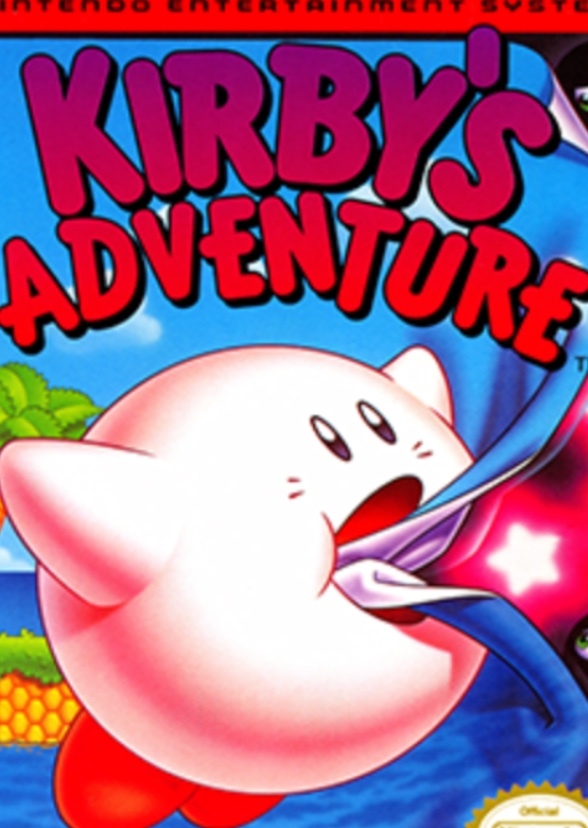
Kirby
Kirby[a] is an action-platformer video game series developed by HAL Laboratory and published by Nintendo. The series centers around the adventures of the a young, pink alien hero named Kirby as he fights to save his home on the distant Planet Popstar from a variety of threats. The majority of the games in the series are side-scrolling platformers with puzzle solving and beat 'em up elements. Kirby has the ability to inhale enemies and objects into his mouth, spitting them out as a projectile or eating them. If he eats certain things he can gain the powers or properties of that object manifesting as a new weapon or power-up called a Copy Ability. The series is intended to be easy to pick up and play even for people unfamiliar with action games, while at the same time offering additional challenge and depth for more experienced players to come back to. The Kirby series includes a total of over twenty games, and has sold over 34 million units worldwide, putting it in the top 50 best selling video game franchises of all time.
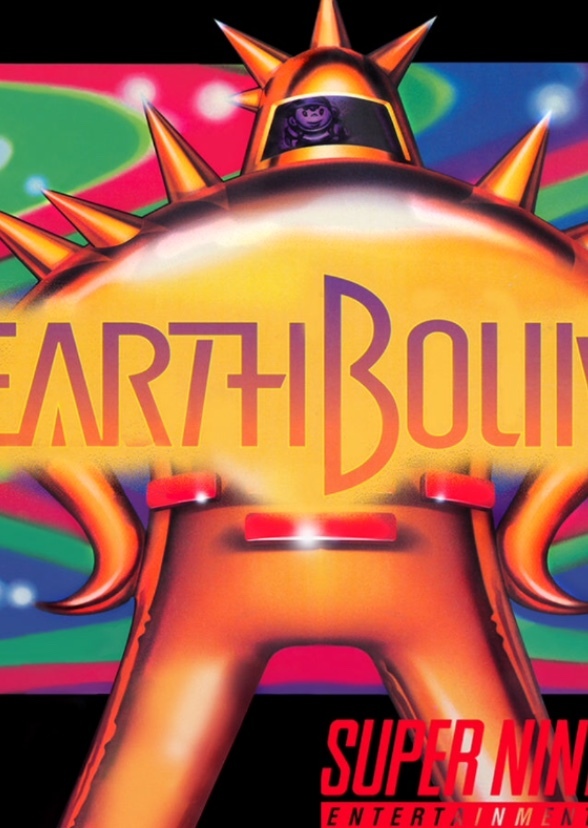
Earthbound
EarthBound (known as Mother 2 in Japan)[nb 1] is a role-playing video game developed by Ape Inc. and HAL Laboratory and published by Nintendo for the Super Nintendo Entertainment System. The second entry in the Mother series, it was first released in Japan in August 1994, and in North America in June 1995. As Ness and his party of four, the player travels the world to collect melodies from eight Sanctuaries in order to defeat the evil alien force Giygas. EarthBound had a lengthy development period that spanned five years. Its returning staff from Mother (1989) included writer/director Shigesato Itoi and lead programmer Satoru Iwata, as well as composers Keiichi Suzuki and Hirokazu Tanaka, who incorporated a diverse range of styles into the soundtrack, including salsa, reggae, and dub. Most of the other staff members had not worked on the original Mother, and the game came under repeated threats of cancellation until Iwata joined the team. Originally scheduled for release in January 1993, the game was completed around May 1994.

F-Zero
Zero is a series of futuristic racing video games originally created by Nintendo EAD with multiple games developed by outside companies. The first game was released for the Super Nintendo Entertainment System in 1990; its success prompted Nintendo to create multiple sequels on subsequent gaming consoles. The series is known for its high-speed racing, unique characters and settings, difficult gameplay, and original music, as well as for pushing technological limits to be one of the fastest racing games. The original title inspired the creation of games such as Daytona USA[2] and the Wipeout series.[3][4] The series has been dormant since the Japanese-exclusive release of F-Zero Climax in 2004. Elements of the series have been represented in other Nintendo video games, including in the Super Smash Bros. and Mario Kart franchise. Past installments have been emulated across multiple Nintendo consoles with the Virtual Console service. The original F-Zero is one of the selected games emulated on the Super NES Classic Edition.[5]
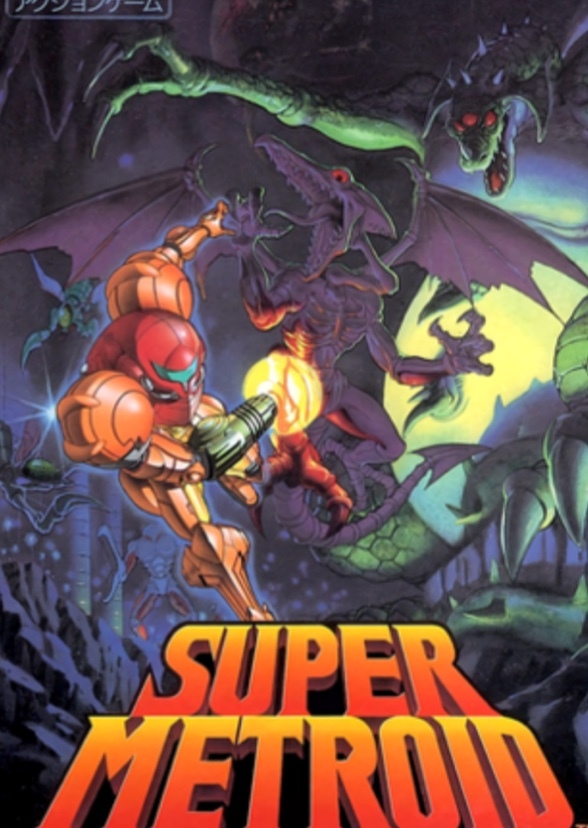
Metroid
Metroid is a science fiction action game franchise created by Nintendo. The series is primarily produced by the company's first-party developers Nintendo R&D1 and Retro Studios, although some games have been handled by other developers, including Fuse Games, Team Ninja, Next Level Games, and MercurySteam. Metroid follows space-faring bounty hunter Samus Aran, who protects the galaxy from the Space Pirates and their attempts to harness the power of the parasitic Metroid creatures. Metroid combines the platforming of Super Mario Bros. and the adventure of The Legend of Zelda with a dark science fiction atmosphere and greater emphasis on nonlinear gameplay. The series consists of fourteen games that were released on each Nintendo video game console except the Nintendo 64. It is one of Nintendo's most successful franchises, and the games have received varying levels of critical acclaim. As of September 2012, the Metroid series had sold over 17.44 million copies.[1] The series has been represented in other Nintendo media, including the Super Smash Bros. series. Additional media includes soundtracks, comic books, and manga.
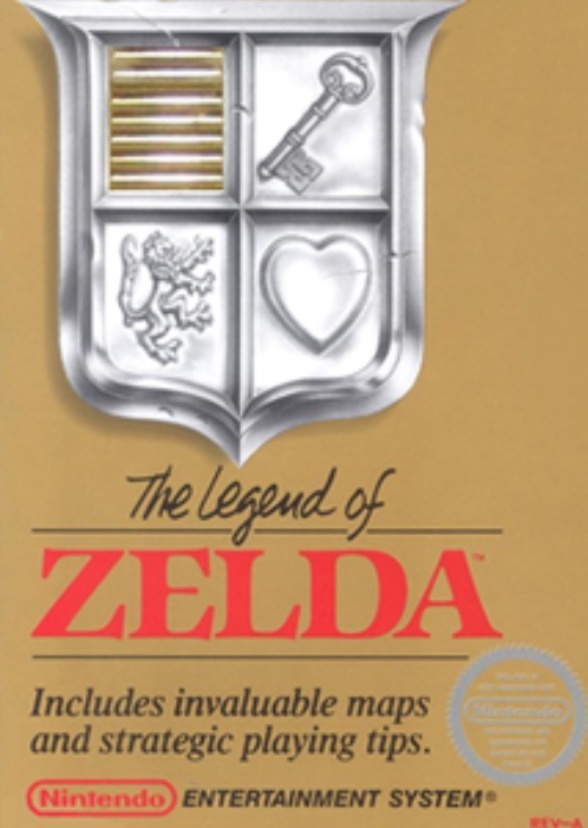
The Legend Of Zelda
The Legend of Zelda[a] is a fantasy action-adventure video game franchise created by Japanese game designers Shigeru Miyamoto and Takashi Tezuka. It is primarily developed and published by Nintendo, although some portable installments and re-releases have been outsourced to Capcom, Vanpool, and Grezzo. The series' gameplay incorporates action-adventure and elements of action RPG games. The series centers on Link, the elf-like player character and chief protagonist. Link is often given the task of rescuing Princess Zelda and the kingdom of Hyrule from Ganon, an evil warlord turned demon who is the principal antagonist of the series; however, other settings and antagonists have appeared in several games. The plots commonly involve a relic known as the Triforce, a set of three golden triangles representing the virtues of Courage, Wisdom and Power that together are omnipotent. The protagonist in each game is usually not the same incarnation of Link, but a few exceptions exist. Since the original Legend of Zelda was released in 1986, the series has expanded to include 19 entries on all of Nintendo's major game consoles, as well as a number of spin-offs. An American animated TV series based on the games aired in 1989 and individual manga adaptations commissioned by Nintendo have been produced in Japan since 1997. The Legend of Zelda is one of Nintendo's most prominent and successful franchises; many of its entries are considered to be among the greatest video games of all time.

Donkey Kong Country
Donkey Kong is a series of video games featuring the adventures of a gorilla character called Donkey Kong, conceived by Shigeru Miyamoto in 1981. The franchise consists mainly of two game genres, but also includes additional spin-off titles of various genres. The games of the first genre are mostly single-screen platform/action puzzle types, featuring Donkey Kong as the opponent in an industrial construction setting. Donkey Kong first made his appearance in the 1981 arcade machine called Donkey Kong, in which he faced Jumpman (Mario), now Nintendo's flagship character. This game was also the first appearance of Mario, pre-dating the well-known Super Mario Bros. by four years. In 1994, the series was revived as the Donkey Kong Country series, featuring Donkey Kong and his clan of other apes as protagonists in their native jungle setting versus a variety of anthropomorphic enemies, usually against the Kremlings, a clan of crocodiles, and their leader King K. Rool. These are side-scrolling platform games. Titles outside these two genres have included rhythm games (Donkey Konga), racing games (Diddy Kong Racing), and edutainment (Donkey Kong Jr. Math). A hallmark of the Donkey Kong franchise is barrels, which the Kongs use as weapons, vehicles, furniture, and lodging. The Donkey Kong character is highly recognizable and very popular; the franchise has sold over 40 million units worldwide.

Super Mario Bros.
The Mario[a] franchise is a media franchise, published and produced by video game company Nintendo, starring the fictional Italian character Mario. It is primarily a video game franchise, with the franchise's other forms of media including several television series and a feature film. It was originally created by game designer Shigeru Miyamoto with the arcade game Donkey Kong, released on July 9, 1981. The games have been developed by a variety of developers including Nintendo, Hudson Soft, and AlphaDream. Most Mario games have been released for Nintendo's various video game consoles and handhelds, from the third generation onwardThe main series in the franchise is the Super Mario platform series, which mostly follows Mario's adventures in the fictional world of the Mushroom Kingdom. These games typically rely on Mario's jumping ability to allow him to progress through levels. The franchise has spawned more than 200 games of various genres and series, including Super Mario, Mario Kart, Mario Party, Mario Tennis, and Mario Golf. The Mario series is one of Nintendo's most renowned and successful franchises. Many games in its series, specifically the "Super Mario" part, are considered to be some of the greatest video games ever made. By 2011, the core Super Mario video games had grossed an estimated US$12 billion in sales.[1] More than 500 million copies of Mario games have been sold, making it the best-selling video game franchise of all time.