

Stories by @hwelchrdh
8 stories

The Story of Arthur Truluv
Three people find their way back from loss and loneliness to a different kind of belonging in this deeply moving novel. Arthur, an old widower struggling to overcome his grief, meets Maddy, a troubled teenage girl who avoids school by hiding out where Arthur goes every day for lunch. The two strike up a friendship that draws them out of isolation. Maddy gives Arthur the name Truluv for his positive responses to every outrageous thing she says or does. When Arthur's nosy neighbor Lucille horns in on their friendship, they create an unconventional family, sometimes bickering but most often believing that life's most precious moments are sweeter when shared.
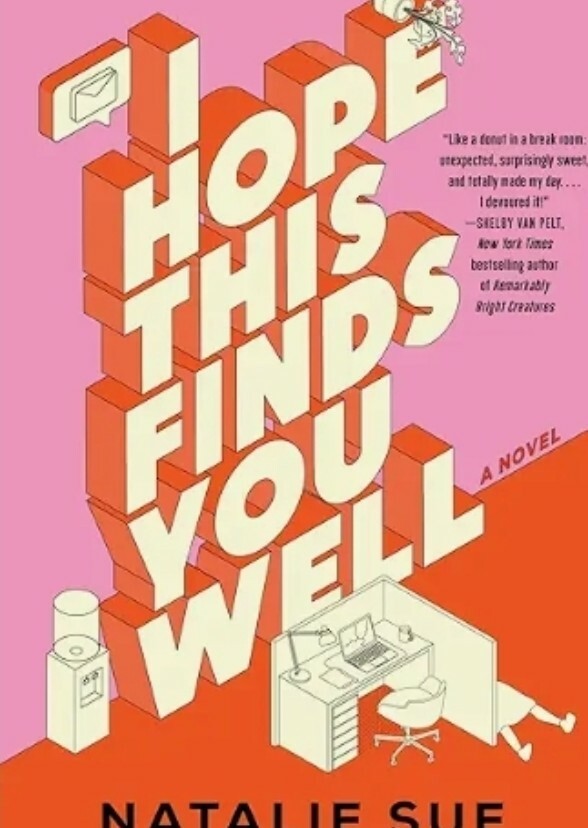
I Hope this Finds you Well
In this wildly funny and heartwarming office comedy, an admin worker accidentally gains access to her colleagues’ private emails and DMs and decides to use this intel to save her job

American Daughters
At the turn of the twentieth century, in a time of great change, two women—separated by societal status and culture but bound by their expected roles as the daughters of famed statesmen—forged a lifelong friendship. Portia Washington’s father Booker T. Washington was a former slave who spent his life championing the education and empowerment of Black Americans through the Tuskegee Institute and his political connections. Dedicated to her father’s values, Portia contributed by teaching and performing spirituals and classical music. But a marriage to a controlling and jealous husband made fulfilling her dreams much more difficult. When Theodore Roosevelt assumed the presidency, his eldest daughter Alice Roosevelt joined him in the White House. To try to win her father’s approval, she eagerly jumped in to help him succeed, but Alice’s political savvy and nonconformist behavior alienated as well as intrigued his opponents and allies. When she married a congressman, she carved out her own agendas and continued espousing women’s rights and progressive causes. Brought together in the wake of their fathers’ friendship, these bright and fascinating women helped each other struggle through marriages, pregnancies, and political upheaval, supporting each other throughout their lives.
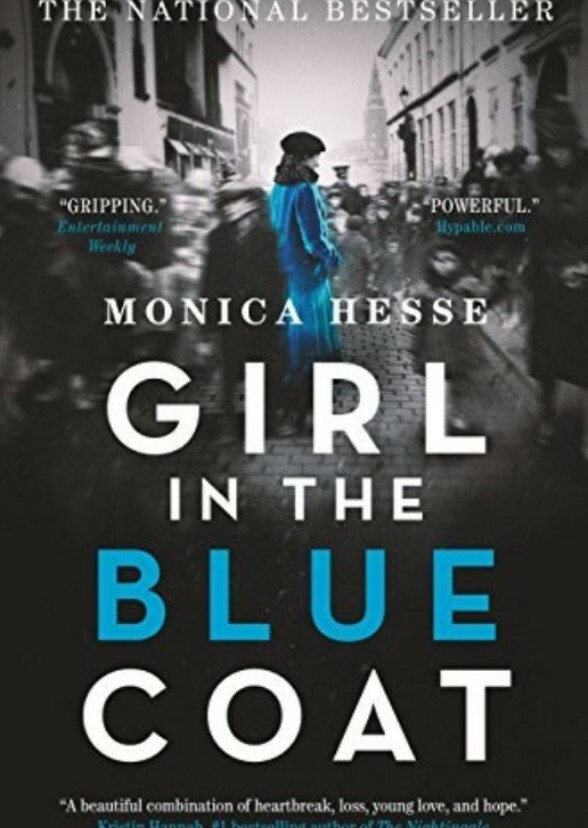
Girl in the Blue Coat
Amsterdam, 1943. Hanneke spends her days procuring and delivering sought-after black market goods to paying customers, her nights hiding the true nature of her work from her concerned parents, and every waking moment mourning her boyfriend, who was killed on the Dutch front lines when the Germans invaded. She likes to think of her illegal work as a small act of rebellion. On a routine delivery, a client asks Hanneke for help. Expecting to hear that Mrs. Janssen wants meat or kerosene, Hanneke is shocked by the older woman's frantic plea to find a person - a Jewish teenager Mrs. Janssen had been hiding, who has vanished without a trace from a secret room. Hanneke initially wants nothing to do with such dangerous work, but is ultimately drawn into a web of mysteries and stunning revelations that lead her into the heart of the resistance, open her eyes to the horrors of the Nazi war machine, and compel her to take desperate action. Beautifully written, intricately plotted, and meticulously researched, Girl in the Blue Coat is an extraordinary, gripping novel from a bright new voice.

The Art Thief
For centuries, works of art have been stolen in countless ways from all over the world, but no one has been quite as successful at it as the master thief Stéphane Breitwieser. Carrying out more than two hundred heists over nearly eight years—in museums and cathedrals all over Europe—Breitwieser, along with his girlfriend who worked as his lookout, stole more than three hundred objects, until it all fell apart in spectacular fashion.
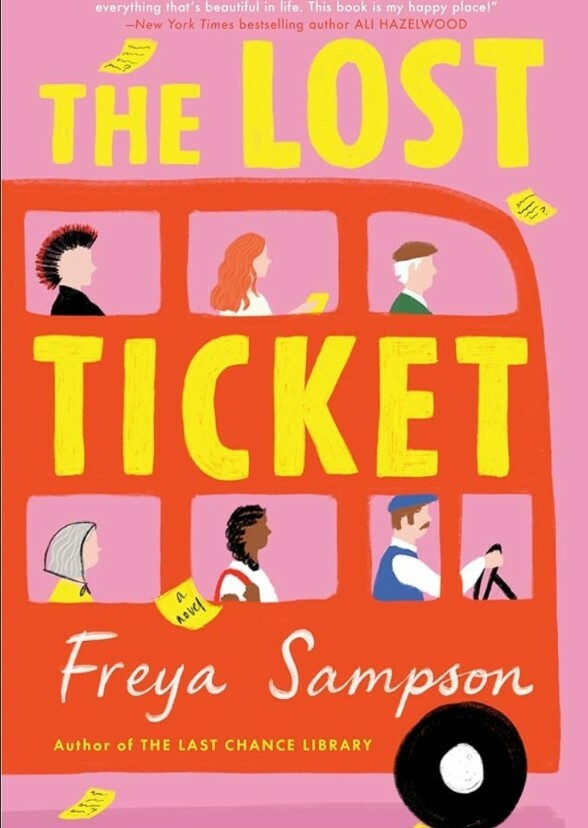
The Lost Ticket
Strangers aboard a London bus unite to help an elderly man find his missed love connection in the heartwarming new novel from the author of The Last Chance Library. When Libby Nicholls arrives in London, brokenhearted and with her life in tatters, the first person she meets on the bus is elderly Frank. He tells her about the time in 1962 that he met a girl on the number 88 bus with beautiful red hair just like hers. They made plans for a date at the National Gallery art museum, but Frank lost the bus ticket with her number on it. For the past sixty years, he’s ridden the same bus trying to find her, but with no luck. Libby is inspired to action and, with the help of an unlikely companion, she papers the bus route with posters advertising their search. Libby begins to open her guarded heart to new friendships and a budding romance, as her tightly controlled world expands. But with Frank’s dementia progressing quickly, their chance of finding the girl on the 88 bus is slipping away. More than anything, Libby wants Frank to see his lost love one more time. But their quest also shows Libby just how important it is to embrace her own chances for happiness—before it’s too late—in a beautifully uplifting novel about how a shared common experience among strangers can transform lives in the most marvelous ways.

The Heaven and Earth Grocery Store
In 1972, when workers in Pottstown, Pennsylvania, were digging the foundations for a new development, the last thing they expected to find was a skeleton at the bottom of a well. Who the skeleton was and how it got there were two of the long-held secrets kept by the residents of Chicken Hill, the dilapidated neighbourhood where immigrant Jews and African Americans lived side by side and shared ambitions and sorrows. As these characters' stories overlap and deepen, it becomes clear how much the people who live on the margins struggle and what they must do to survive. When the truth is finally revealed about what happened on Chicken Hill and the part the town's white establishment played in it, McBride shows us that even in dark times, it is love and community-heaven and earth-that sustain us.

Hello Stranger
Sadie Montgomery never saw what was coming . . . Literally! One minute she’s celebrating the biggest achievement of her life—placing as a finalist in the North American Portrait Society competition—the next, she’s lying in a hospital bed diagnosed with a “probably temporary” condition known as face blindness. She can see, but every face she looks at is now a jumbled puzzle of disconnected features. Imagine trying to read a book upside down and in another language. This is Sadie’s new reality with every face she sees. But, as she struggles to cope, hang on to her artistic dream, work through major family issues, and take care of her beloved dog, Peanut, she falls into—love? Lust? A temporary obsession to distract from the real problems in her life?—with not one man but two very different ones. The timing couldn’t be worse. If only her life were a little more in focus, Sadie might be able to find her way. But perceiving anything clearly right now seems impossible. Even though there are things we can only find when we aren’t looking. And there are people who show up when we least expect them. And there are always, always other ways of seeing.