

Stories by @detectivecinematics
5 stories
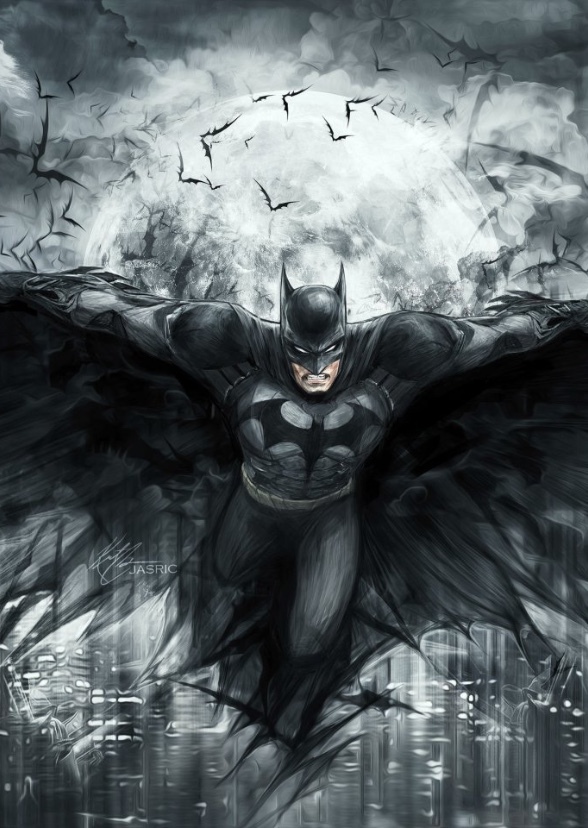
𝔗𝔥𝔢 𝔇𝔞𝔯𝔨 𝔎𝔫𝔦𝔤𝔥𝔱 ℑ: 𝔅𝔢𝔤𝔦𝔫𝔰
On Christmas Eve, billionaire Bruce Wayne returns to Gotham after ten years, having trained abroad for a war against crime. Despite his skills, Bruce feels unprepared, haunted by his time with the League of Shadows and Slade Wilson, who betrayed him. Slade, disguised as David Cain, recruited Bruce into the League, leading to a final confrontation where Bruce scarred Slade’s eye, igniting their rivalry. Bruce investigates Mayor Oswald Cobblepot’s role in his parents’ death and clashes accidentally with James Gordon for the first time. Injured, Bruce returns home, melts down the gun that killed his parents, and forges it into his Bat symbol, vowing to fight as Batman. With Lucius Fox Jr.’s help, Bruce dons advanced gear and strikes fear into Gotham’s criminals. Meanwhile, Cobblepot hires Deathstroke, who kidnaps Sergeant Gordon’s daughter, Barbara, to lure Batman. Their battle reignites Slade’s thirst for revenge. Batman rescues Barbara, but Deathstroke deduces Bruce’s identity, intensifying their conflict. Later, Deathstroke attacks the Batcave, severely injuring Alfred. At Bruce’s New Year’s Eve party, Deathstroke reveals his identity and orchestrates a city-wide blackout, setting Gotham into chaos. With Gordon’s help, Batman stops Slade’s plan, but the rivalry persists. In the aftermath, Bruce retakes control of Wayne Enterprises and vows to protect Gotham, as Slade is approached by Amanda Waller for a secret mission.
A Holy Land Love Story
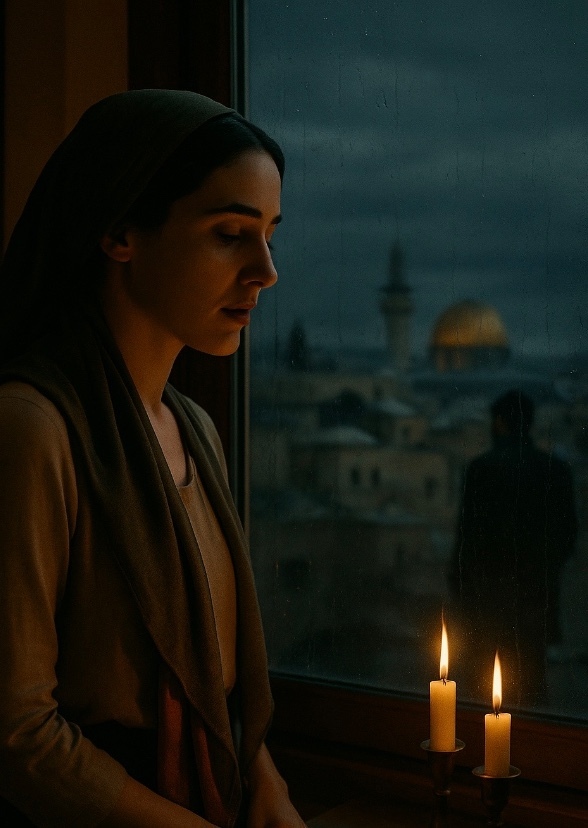
Leah Stein lived in a quiet apartment in Rehavia, a part of Jerusalem where church bells and calls to prayer folded into each other. Every Friday evening she lit two Shabbat candles, their flames trembling against the glass. Her partner, Daniel Kohn, a gentle medical researcher, would bless the wine with calm precision. Their lives ran on order—measured, polite, predictable. Yet behind Leah’s composure lived a silence that was no longer peace. At a heritage conference she met Yusef Rahman, an Arab architect restoring homes in the Old City. Their first talk was about design, but his manner—direct, listening, patient—disarmed her. He said, “We keep rebuilding walls, never foundations.” She laughed, yet the phrase followed her home. They began meeting for coffee, then for walks through narrow alleys where history pressed close. With Yusef she felt visible again. She could speak about literature, doubt, and loneliness without caution. What began as conversation became a quiet attachment, growing in the spaces Daniel’s kindness could not reach. Daniel noticed but said nothing. His answer to unease was gentleness: more patience, more small gestures. Leah met this tenderness with guilt, yet guilt did not lessen the pull she felt toward Yusef. During a storm one evening, reviewing his translation notes by candlelight, she realized the boundary had already been crossed—not in action but in understanding. When he looked at her, it was as if he recognized the part of her that she had kept buried under correctness. After that night, Leah lived divided. With Daniel she kept routines—morning coffee, news headlines, small jokes. With Yusef she walked the streets in anonymity, suspended between belief and betrayal. There was no passion to justify it, no rebellion to romanticize it—only the deep, frightening sense of being known. She told herself it was temporary, but the truth had already rooted itself quietly. Daniel discovered the affair by intuition. One evening he found an email—an architectural sketch signed “see you by the walls.” He did not confront her with anger. He simply asked, “When you speak with him, do you feel more yourself?” Leah said nothing. Silence confirmed what words would only wound further. Two weeks later Daniel left for a research post in Switzerland. His departure was calm, almost polite; he kissed her forehead like a farewell to a former life. Leah stood in the empty apartment, surrounded by order, and felt the unbearable freedom of someone who has broken something beyond repair. Her meetings with Yusef continued but lost their innocence. Without secrecy, they felt exposed. The city itself seemed to turn against them—neighbors’ glances, unspoken rumors, the weight of identities that history had already declared incompatible. What had felt liberating began to feel like exile. One evening, sitting on her mother’s balcony in Haifa, Leah listened to the sea and confessed nothing. Her mother, without knowing the story, said softly, “Love doesn’t keep you safe. It keeps you honest.” That night Leah wrote Yusef: I need to stop building in borrowed space. She never sent it, but she never saw him again. Months passed. Leah poured her restlessness into work, writing a book about literature and divided cities. Critics praised its clarity; she felt only fatigue. Daniel sent postcards—brief, kind, distant. Yusef’s name appeared in an architectural journal, credited for a restoration award. The world moved forward with quiet efficiency, leaving her to navigate the ruins of her choices. A year later, they met by chance at a conference in Tel Aviv. He smiled, older around the eyes. She said, “I still think about foundations.” He answered, “And I still think about light.” They parted without promise or regret—two lives that had intersected precisely once in honesty. That evening, back in Jerusalem, Leah lit the candles alone. The room filled with amber light and its twin reflection in the window. Beyond the glass, the city spread in shadow: domes, rooftops, and the faint echo of the muezzin’s call. Rain traced slow paths down the pane, dividing reflection from reality. She stood motionless, watching the candles burn lower until only one remained. In its last, trembling glow she understood what had driven everything—not passion, not rebellion, but the human need to be seen completely, even if only for a moment. When the flame died, she whispered into the darkness: Some distances are not meant to be crossed. They are meant to be understood.

THE WALL: TV Show
A

SUPERMAN PART 2: Man of Tomorrow
To be continued…

SUPERMAN: Man of Steel
As Krypton dies, Jor-El and Lara send their infant son, Kal-El, to Earth, leaving him a message: among humanity, he’ll be stronger and wiser, but true greatness lies in restraint and compassion. Raised as Clark Kent in Smallville, Clark hides his gifts while learning humility and kindness from his adoptive parents. Searching for purpose, he wanders the world, witnessing both humanity’s darkness and its courage. In Metropolis, Clark joins the Daily Planet, befriends bold reporter Lois Lane and the ever-resourceful Jimmy Olsen, and dons the “S” symbol of hope to become Superman after saving the city from disaster. His heroism captivates a divided public, but Lex Luthor fuels suspicion by leaking Jor-El’s message, painting Superman as an outsider who sees humans as inferior. As fear and debate sweep the city, Luthor unleashes Metallo, a Kryptonite-powered threat. Weakened but undaunted, Superman defeats Metallo by saving him, proving strength through mercy. Lois’s reporting reframes Superman as a hero who could rule but chooses to serve. At sunrise, Clark stands as a beacon of hope, inspiring a world to believe in tomorrow.