Age: 78
female
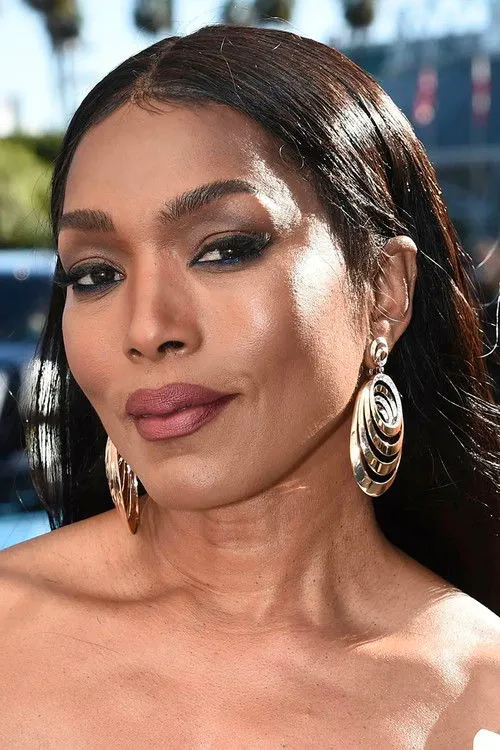
Phylicia Rashad (née Ayers-Allen; born June 19, 1948) is an American actress. She was most recently dean of the College of Fine Arts at Howard University before her three-year contract ended in May 2024. Known for her roles on stage and screen, she has received two Tony Awards as well as nominations for six Primetime Emmy Awards and a Screen Actors Guild Award. She is best known for her role as Clair Huxtable on the NBC sitcom The Cosby Show (1984–1992) which earned her two Primetime Emmy Award for Outstanding Lead Actress in a Comedy Series nominations in 1985 and 1986. She also played Ruth Lucas on Cosby (1996–2000), and Brenda Glover in Little Bill (1999–2004). She was also Emmy-nominated for her roles in A Raisin in the Sun (2008) and This Is Us (2019–2021). On stage, Rashad became the first Black actress to win the Tony Award for Best Actress in a Play, for a revival of A Raisin in the Sun (2004). She won her second Tony Award for Best Featured Actress in a Play for Dominique Morisseau's Skeleton Crew (2022). Her other Broadway credits include Into the Woods (1988), Jelly's Last Jam (1993), Gem of the Ocean (2004), and Cat on a Hot Tin Roof (2008). She has appeared in various films such as For Colored Girls (2010), Good Deeds (2012), Creed (2015), Creed II (2018), Creed III (2023), and The Beekeeper (2024). She lent her voice to the Disney-Pixar animated film Soul (2020). In the 21st century, she has directed revivals of three plays by August Wilson, in major theaters in Seattle, Princeton, New Jersey; and Los Angeles. She also directed Purpose (play) in its 2024-2025 run at the Helen Hayes Theater on Broadway.

Pharaoh Rameses I of Egypt orders the death of all newborn Hebrew males. Yoshebel saves her infant son by setting him adrift in a basket on the Nile. Bithiah, the Pharaoh's daughter, finds the basket and decides to adopt the boy even though her servant, Memnet, recognizes the child is Hebrew. Bithiah names the baby Moses. Prince Moses grows up to become a successful general, winning a war with Ethiopia and establishing an alliance. Moses and princess Nefretiri fall in love, but she must marry the next Pharaoh. While working on the building of a city for Pharaoh Sethi's jubilee, Moses meets the stonecutter Joshua, who tells him of the Hebrew God. Moses saves an elderly woman from being crushed not knowing that she is his biological mother, Yoshebel, and he reprimands the taskmaster and overseer Baka. Moses reforms the treatment of slaves on the project, but Prince Rameses, Moses's adoptive brother, charges him with planning an insurrection. Moses says he is making his workers more productive, making Rameses wonder if Moses is the man the Hebrews are calling the Deliverer. Nefretiri learns from Memnet that Moses is the son of Hebrew slaves. She kills Memnet but reveals the story to Moses only after he finds the piece of Levite cloth he was wrapped in as a baby, which Memnet had kept. Moses follows Bithiah to Yoshebel's house where he meets his biological mother, Brother Aaron, and Sister Miriam. Moses learns more about the slaves by working with them. Nefretiri urges him to return to the palace so he may help his people when he becomes pharaoh, to which he agrees after he completes a final task. Moses saves Joshua from death by killing Baka, telling Joshua that he too is Hebrew. The confession is witnessed by the overseer Dathan, who then reports to Rameses. After being arrested, Moses explains that he is not the Deliverer, but would free the slaves if he could. Rameses is declared the next Pharaoh and banishes Moses to the desert. Yoshebel dies sometime later. Moses makes his way across the desert to a well in Midian. After defending seven sisters from Amalekites, Moses is housed with the girls' father Jethro, a Bedouin sheik, who worships the God of Abraham. Moses marries Jethro's eldest daughter Sephora. Later, he finds Joshua, who has escaped hard labor. While farming, Moses sees the burning bush on the summit of Mount Sinai and hears the voice of God. Moses returns to Egypt to free the Hebrews. Moses comes before Rameses, now pharaoh, to win the slaves' freedom, turning his staff into a cobra. Jannes performs the same trick with his staves, but Moses's snake shows superiority. Rameses prohibits straw from being provided to the Hebrews to make their bricks. Nefretiri rescues Moses from being stoned to death by the Hebrews wherein he reveals that he is married. Egypt is visited by plagues. Moses turns the river Nile to blood at a festival of Khnum and brings burning hail down upon Pharaoh's palace. Moses warns him the next plague to fall upon Egypt will be summoned by Pharaoh himself. Enraged at the plagues, Rameses orders all first-born Hebrews to die but a cloud of death instead kills all the firstborn of Egypt, including the child of Rameses and Nefretiri. Angrily, Pharaoh exiles the Hebrews, which begins the Exodus from Egypt. Rameses takes his army and pursues the Hebrews to the Red Sea. Moses uses God's help to stop the Egyptians with a pillar of fire and parts the Red Sea. After the Hebrews make it to safety, Moses releases the walls of water, drowning the Egyptian army. A devastated Rameses returns empty-handed to Nefretiri, stating that he now acknowledges Moses's god as God. Moses again ascends the mountain with Joshua. Impatiently, Dathan urges a reluctant Aaron to construct a golden calf idol as a gift for Rameses. A wild and decadent orgy is held by most of the Hebrews. Moses sees the Ten Commandments created by God in two stone tablets. Moses descends from the mountain to the sight of decadence. Enraged, he throws the tablets at the golden calf, which explodes, killing the wicked revelers, and causing the others to wander in the wilderness for 40 years. Forty years later, an elderly Moses leads the Hebrews towards Canaan. However, he could not enter the Promised land due to his disobedience to the Lord at the Waters of Strife. He instead names Joshua as leader, and spends the rest of his life at Mount Nebo until his death.