Age: 89
male
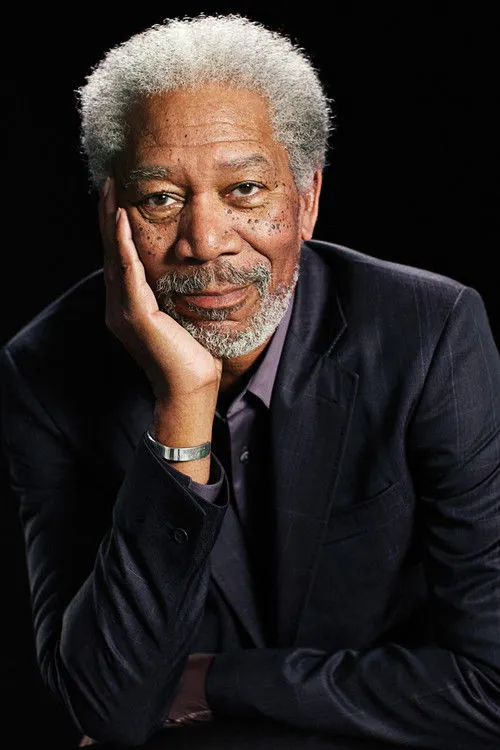
Morgan Freeman (born June 1, 1937) is an American actor, director, and narrator. Noted for his distinctive deep voice, Freeman is known for his various roles in a wide variety of film genres. Throughout his career spanning over five decades, he has received multiple accolades, including an Academy Award, a Screen Actors Guild Award, and a Golden Globe Award. Born in Memphis, Tennessee, Freeman was raised in Mississippi where he began acting in school plays. He studied theatre arts in Los Angeles and appeared in stage productions in his early career. He rose to fame in the 1970s for his role in the children's television series The Electric Company. Freeman then appeared in the Shakespearean plays Coriolanus and Julius Caesar, the former of which earned him an Obie Award. His breakout role was in Street Smart (1987), playing a hustler, which earned him an Academy Award nomination for Best Supporting Actor. He achieved further stardom in Glory, the biographical drama Lean on Me, and comedy-drama Driving Miss Daisy (all 1989), the latter of which garnered him his first Academy Award nomination for Best Actor. In 1992, Freeman starred alongside Clint Eastwood in the western revenge film Unforgiven; this would be the first of several collaborations with Eastwood. In 1994, he starred in the prison drama The Shawshank Redemption for which he received another Academy Award nomination. Freeman also starred in David Fincher's crime thriller Se7en (1995), and Steven Spielberg's historical drama Amistad (1997). Freeman won the Academy Award for Best Supporting Actor for his performance in Clint Eastwood's 2004 sports drama Million Dollar Baby. In 2009, he received his fifth Oscar nomination for playing former South African President Nelson Mandela in Eastwood's Invictus. Freeman is also known for his performance as Lucius Fox in Christopher Nolan's The Dark Knight Trilogy (2005–2012). In addition to acting, Freeman has directed the drama Bopha! (1993). He also founded film production company Revelations Entertainment with business partner Lori McCreary. He is the recipient of the Kennedy Center Honor, the AFI Life Achievement Award, the Cecil B. DeMille Award, and the Screen Actors Guild Life Achievement Award. For his performances in theatrical productions, he has won three Obie Awards, one of the most prestigious honors for recognizing excellence in theatre.
Morgan Freeman

Miracle Max
for Miracle Max in The Princess Bride
Suggested by taurusdragon64

An elderly man reads the book "The Princess Bride" to his sick and thus currently bedridden adolescent grandson, the reading of the book which has been passed down within the family for generations. The grandson is sure he won't like the story, with a romance at its core, he preferring something with lots of action and "no kissing". But the grandson is powerless to stop his grandfather, whose feelings he doesn't want to hurt. The story centers on Buttercup, a former farm girl who has been chosen as the princess bride to Prince Humperdinck of Florian. Buttercup does not love him, she who still laments the death of her one true love, Westley, five years ago. Westley was a hired hand on the farm, his stock answer of "as you wish" to any request she made of him which she came to understand was his way of saying that he loved her. But Westley went away to sea, only to be killed by the Dread Pirate Roberts. On a horse ride to clear her mind of her upcoming predicament of marriage, Buttercup is kidnapped by a band of bandits: Vizzini who works on his wits, and his two associates, a giant named Fezzik who works on his brawn, and a Spaniard named Inigo Montoya, who has trained himself his entire life to be an expert swordsman. They in turn are chased by the Dread Pirate Roberts himself. But chasing them all is the Prince, and his men led by Count Tyrone Rugen. What happens to these collectives is dependent partly on Buttercup, who does not want to marry the Prince, and may see other options as lesser evils, and partly on the other motives of individuals within the groups. But a larger question is what the grandson will think of the story as it proceeds and at its end, especially as he sees justice as high a priority as action.