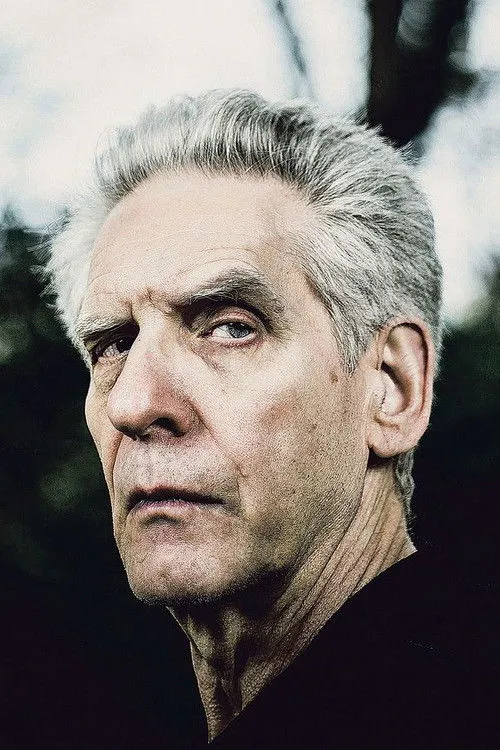
Age: 83
male
David Paul Cronenberg (born 15 March 1943) is a Canadian film director, screenwriter, producer and actor. He is a principal originator of the body horror genre, with his films exploring visceral bodily transformation, infectious diseases, and the intertwining of the psychological, physical, and technological. Cronenberg is best known for exploring these themes through sci-fi horror films such as Shivers (1975), Scanners (1981), Videodrome (1983), and The Fly (1986). However, he has also directed dramas, psychological thrillers, and gangster films. Cronenberg's films have polarized critics and audiences; he has earned critical acclaim and sparked controversy for his depictions of gore and violence. The Village Voice called him "the most audacious and challenging narrative director in the English-speaking world". His films have won numerous awards, including the Special Jury Prize for Crash at the 1996 Cannes Film Festival, a unique award that is distinct from the Jury Prize as it is not given annually but only at the request of the official jury, who in this case gave the award "for originality, for daring, and for audacity". From the 2000s to the 2020s, Cronenberg collaborated on several films with Viggo Mortensen, including A History of Violence (2005), Eastern Promises (2007), A Dangerous Method (2011) and Crimes of the Future (2022). Seven of his films were selected to compete for the Palme d'Or, the most recent being The Shrouds (2024), which was screened at the 2024 Cannes Film Festival. Description above from the Wikipedia article David Cronenberg, licensed under CC-BY-SA, is a full list of contributors on Wikipedia.
David Cronenberg

Director
for Director in The Invincible Hulk
Suggested by miguelrodriguez

Years after the destruction caused by his first transformation, Bruce Banner lives in exile, hiding in the shadows of Rio de Janeiro. Hunted by the U.S. military and consumed by guilt, Bruce devotes his life to suppressing the monster within him. Through meditation, controlled breathing, and experimental treatments, he believes he is close to a cure. Unbeknownst to Bruce, General Thaddeus Ross has never stopped hunting him. Obsessed with turning the Hulk into a weapon, Ross enlists elite soldier Emil Blonsky, a highly decorated operative whose arrogance and thirst for power rival his combat skill. Blonsky leads a task force that tracks Bruce to Brazil, triggering a brutal confrontation that unleashes the Hulk once more. The encounter leaves Blonsky broken—but inspired. Witnessing the Hulk’s power awakens a dangerous obsession. Ross authorizes an experimental serum designed to enhance Blonsky, unaware that it is a corrupted derivative of the same research that created the Hulk. The serum grants Blonsky superhuman abilities, but destabilizes his mind. Bruce flees to New York, reconnecting with Betty Ross, the woman he loves and the life he lost. Together, they seek help from scientist Samuel Sterns, who believes Bruce’s condition holds the key to limitless human evolution. Sterns claims he can cure Bruce—but secretly preserves samples of his gamma-irradiated blood. As Ross closes in, Blonsky demands more power. Against all warnings, Sterns injects him with Bruce’s gamma blood. The transformation is catastrophic. Blonsky mutates into the Abomination, a monstrous being driven by rage and superiority, leaving a trail of destruction through Harlem. Forced out of hiding, Bruce embraces the Hulk to stop the creature he indirectly helped create. The two titans clash in a devastating battle that tears through the city. In the end, the Hulk defeats Abomination and disappears before the military can capture him. Ross is left with failure, Sterns begins to show signs of mutation, and Bruce retreats into isolation—no closer to a cure, but finally accepting the truth. The monster cannot be destroyed. It can only be controlled.