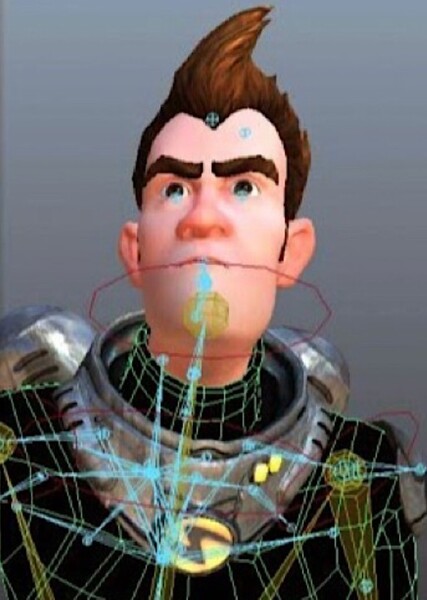
Computer animation is the process used for digitally generating animated images. The more general term computer-generated imagery (CGI) encompasses both static scenes and dynamic images, while computer animation only refers to moving images. Modern computer animation usually uses 3D computer graphics to generate a three-dimensional picture. Sometimes, the target of the animation is the computer itself, but sometimes film as well. Computer animation is essentially a digital successor to stop motion techniques, but using 3D models, and traditional animation techniques using frame-by-frame animation of 2D illustrations. Computer-generated animations can also allow a single graphic artist to produce such content without the use of actors, expensive set pieces, or props. To create the illusion of movement, an image is displayed on the computer monitor and repeatedly replaced by a new image that is similar to it but advanced slightly in time (usually at a rate of 24, 25, or 30 frames/second). This technique is identical to how the illusion of movement is achieved with television and motion pictures. For 3D animations, objects (models) are built on the computer monitor (modeled) and 3D figures are rigged with a virtual skeleton. Then the limbs, eyes, mouth, clothes, etc. of the figure are moved by the animator on key frames. The differences in appearance between key frames are automatically calculated by the computer in a process known as tweening or morphing. Finally, the animation is rendered.[1] For 3D animations, all frames must be rendered after the modeling is complete. For pre-recorded presentations, the rendered frames are transferred to a different format or medium, like digital video. The frames may also be rendered in real time as they are presented to the end-user audience. Low bandwidth animations transmitted via the internet (e.g. Adobe Flash, X3D) often use software on the end-user's computer to render in real time as an alternative to streaming or pre-loaded high bandwidth animations.

Fifteen-year-old Tommy Fry, an awkward but bright teen with a passion for science, lives in the shadow of his father, Dr. Anthony Fry, a top-secret government scientist working for the clandestine agency ARROW. Dr. Anthony Fry’s research focuses on climate and weather manipulation, a field that fascinates Tommy and his two best friends, Michelle and Miguel. Though curious and inventive, the trio often overestimates their abilities and dives into situations they probably shouldn’t. One fateful night, the friends sneak into the high-security weather research facility where Dr. Anthony Fry works. While poking around, they accidentally trigger an experimental system, causing a massive explosion that alters their lives forever. Tommy discovers he can control the weather and adopts the name Thunderstorm. Michelle, now with the ability to move at lightning speed, becomes Swift, while Miguel, infused with the power of fire, takes on the moniker Burn Notice. As Tommy learns to navigate his new abilities, he struggles to balance school, friendship, and the burden of being a hero. When a dangerous figure emerges from the shadows, threatening to harness ARROW’s technology for destruction, Thunderstorm must rise to the occasion. With Swift and Burn Notice at his side, he faces the ultimate challenge: embracing responsibility, protecting the city, and proving that even a kid can change the forecast of the future.