Age: 74
male
Liam Neeson (born 7 June 1952) is an Irish and American actor. He was born in Ballymena, County Antrim, Northern Ireland and educated at Saint Patrick's College, Ballymena Technical College and Queen's University Belfast. He moved to Dublin after university to further his acting career, joining the renowned Abbey Theatre. In the early 1990s, he moved again to the United States, where the wide acclaim for his performance in Schindler's List led to more high-profile work. He is widowed and lives in New York with his two sons. He has been nominated for an Oscar, a BAFTA and three Golden Globe Awards. He has starred in a number of notable roles including Oskar Schindler in Schindler's List, Michael Collins in Michael Collins, Peyton Westlake in Darkman, Jean Valjean in Les Misérables, Qui-Gon Jinn in Star Wars Episode I: The Phantom Menace, Alfred Kinsey in Kinsey, Ras Al Ghul in Batman Begins and the voice of Aslan in The Chronicles of Narnia film series. He has also starred in several other notable films, from major Hollywood studio releases (ie. Excalibur, The Dead Pool, Nell, Rob Roy, The Haunting, Love Actually, Kingdom of Heaven, Taken, Clash of the Titans, The A-Team, Unknown) to smaller arthouse films (ie. Deception, Breakfast on Pluto, Chloe).
Liam Neeson

Príamo
for Príamo in Romulus and Remus (2021)
Suggested by gerardgarciasoriano
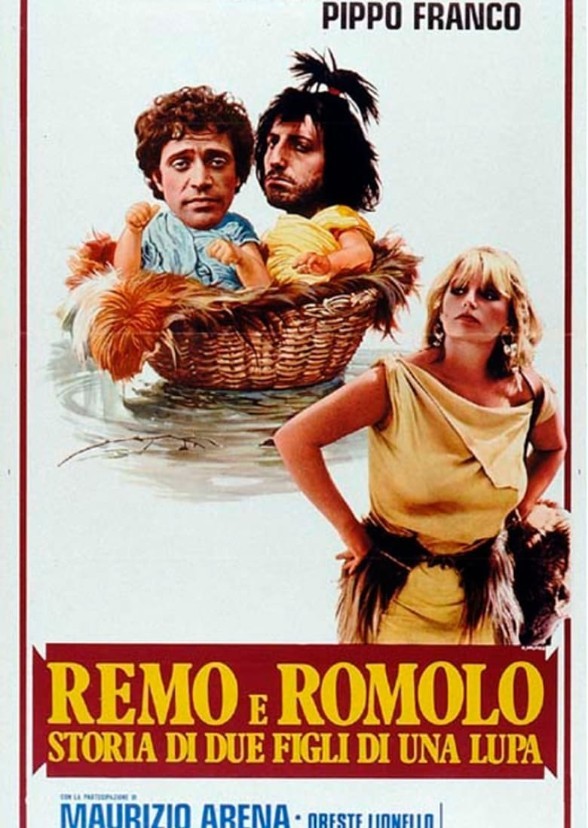
In Roman mythology, Romulus and Remus are twin brothers whose story tells the events that led to the founding of the city of Rome and the Roman Kingdom by Romulus. The killing of Remus by his brother, along with other tales from their story, have inspired artists throughout the ages. Since ancient times, the image of the twins being suckled by a she-wolf has been a symbol of the city of Rome and the ancient Romans. Although the tale takes place before the founding of Rome around 750 BC, the earliest known written account of the myth is from the late 3rd century BC. Possible historical basis for the story, as well as whether the twins' myth was an original part of Roman myth or a later development, is a subject of ongoing debate.