Age: 6
Disney+ is an American subscription video on-demand over-the-top streaming service owned and operated by the Media and Entertainment Distribution division of The Walt Disney Company. The service primarily distributes films and television series produced by The Walt Disney Studios and Walt Disney Television, with dedicated content hubs for the brands Disney, Pixar, Marvel, Star Wars, and National Geographic, as well as Star in some regions. Original films and television series are also distributed on Disney+. Disney+ relies on technology developed by Disney Streaming Services, which was originally established as BAMTech in 2015 when it was spun off from MLB Advanced Media (MLBAM). Disney increased its ownership share of BAMTech to a controlling stake in 2017, and subsequently transferred ownership to DTCI, as part of a corporate restructuring in anticipation of Disney's acquisition of 21st Century Fox. With BAMTech helping to launch ESPN+ in early 2018, and Disney's streaming distribution deal with Netflix ending in 2019, Disney took the opportunity to use technologies being developed for ESPN+ to establish a Disney-branded streaming service that would feature its content. Production of films and television shows for exclusive release on the platform began in late 2017. Disney+ was launched on November 12, 2019, in the United States, Canada, and the Netherlands, and expanded to Australia, New Zealand, and Puerto Rico a week later. It became available in select European countries in March 2020 and in India in April through Star India's Hotstar streaming service, which was rebranded as Disney+ Hotstar. Additional European countries received Disney+ in September 2020, with the service expanding to Latin America in November 2020. It later expanded in Southeast Asian countries since 2021, followed by countries in Northern and Eastern Europe, Middle East and parts of Africa since May 2022. Upon launch, it was met with positive reception of its content library, but was criticized for technical problems and missing content. Alterations made to films and television shows also attracted media attention. Ten million users had subscribed to Disney+ by the end of its first day of operation. The service has 164.2 million global subscribers as of October 1, 2022.
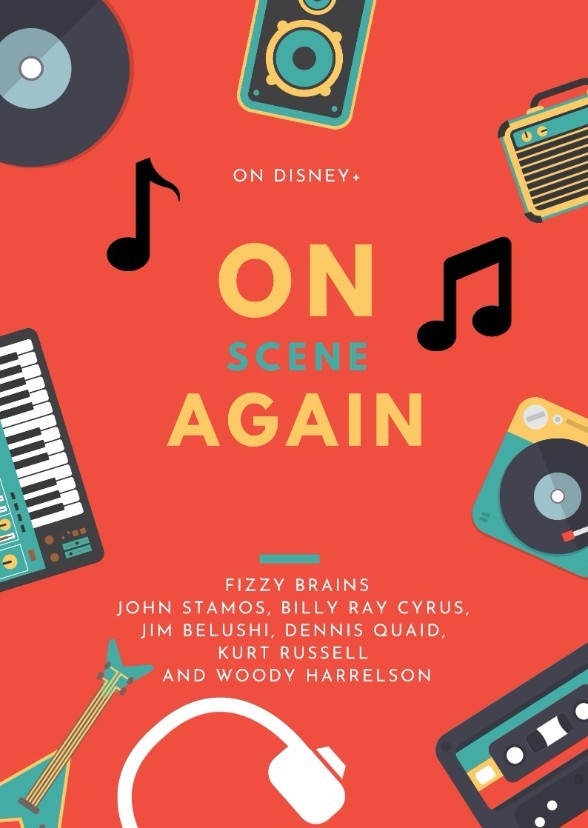
Fizzy Brains were not just a band — they were a phenomenon. At their peak, they sold out arenas, toured the world, and defined a generation. Music wasn’t a job; it was everything. Fame, freedom, chaos, love. Until real life caught up. As the years passed: relationships grew fragile marriages demanded stability children changed priorities egos clashed behind closed doors What the public never saw was the slow collapse: arguments in hotel rooms, missed birthdays, creative control fights, silence between rehearsals. One night, after a disastrous final concert, Fizzy Brains break up — suddenly, publicly, painfully. Years later, each member lives a different, quieter life. The music still echoes in their heads, but the band feels like a closed chapter. Until a chance encounter, an unfinished song, and a realization: They didn’t break up because the music died — they broke up because they stopped listening to each other. Against everyone’s expectations, they decide to reunite. Not for fame. Not for money. But to see if what they had was ever real. They step on scene again — older, scarred, unsure — facing the question: Can something legendary survive real life?