Age: 45
male
Nicholas Britell (born October 17, 1980) is an American film and television composer. He has received numerous accolades, including an Emmy Award, as well as nominations for three Academy Awards and a Grammy Award. He has received Academy Award nominations for Best Original Score for Barry Jenkins's Moonlight (2016), If Beale Street Could Talk (2018), and Adam McKay's Don't Look Up (2021). He also scored McKay's The Big Short (2015) and Vice (2018). He is also known for scoring Battle of the Sexes (2017), The King (2019), Cruella (2021), and She Said (2022). The HBO original series Succession (2018–2023) marked Britell's entry into television. Britell scored all four seasons, earning the Emmy Award for Outstanding Original Main Title Theme Music in 2019. His scores for the second, third, and fourth seasons of Succession each earned the Primetime Emmy Award for Outstanding Music Composition for a Series nominations in 2020, 2022, and 2023. His score for The Underground Railroad was nominated for the Primetime Emmy Award for Outstanding Music Composition for a Limited or Anthology Series, Movie or Special in 2021. His works, as described by Soraya McDonald of Film Comment, "seem to organically straddle accessibility and sophistication in a way that goes beyond the typical programming of a big-city pops orchestra...That might have something to do with the fact that Britell has long had one foot in the world of hip-hop and another in the world of classical music." Description above from the Wikipedia article Nicholas Britell, licensed under CC-BY-SA, full list of contributors on Wikipedia.
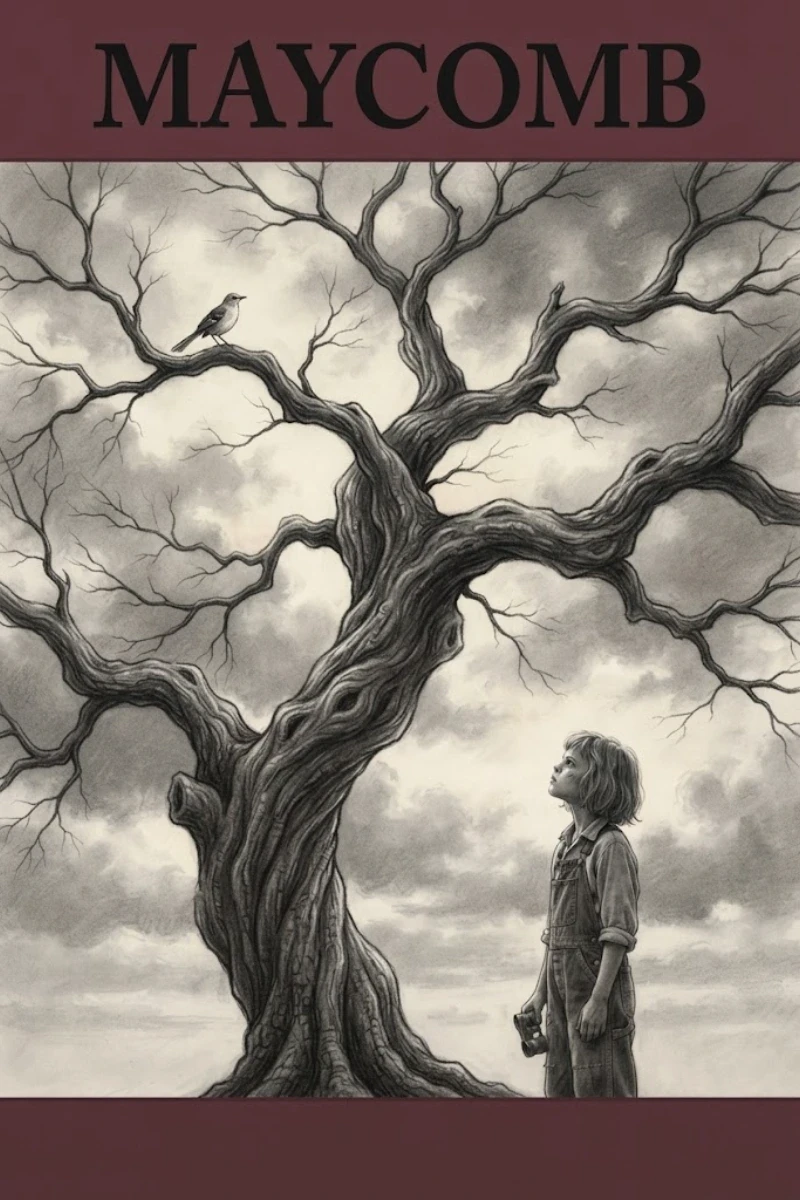
Maycomb is a four-part prestige limited mini-series remake of To Kill a Mockingbird that leverages a premium television format to deeply explore both the atmospheric gothic mystery of childhood and the devastating legal and social realities of the Jim Crow South. Framed through the poetic, reflective voiceover of an older Jean Louise "Scout" Finch, the adaptation chronicles three transformative years in a fractured Alabama town during the Great Depression. The narrative anchors itself on the brilliant, eccentric bond between Scout and her summer friend Dill—two self-described "apart people" whose obsession with their reclusive neighbor, Arthur "Boo" Radley, serves as a poignant exploration of isolation and hidden empathy. This childhood innocence violently collides with the adult world when Scout's father, Atticus Finch, is appointed to defend Tom Robinson, a Black man falsely accused of rape. Drawing stark thematic parallels to historical tragedies like the Scottsboro Boys and the real-life childhood of author Harper Lee, the series dedicates an entire bottle-episode to the claustrophobic courtroom drama where Atticus systematically dismantles the prosecution's case, only for an all-white jury to deliver a devastating guilty verdict that culminates in Tom's tragic death. The final act shifts into a gripping psychological thriller as a humiliated, vengeful Bob Ewell launches a terror campaign against the Finch family, culminating in a pitch-black nighttime ambush on Jem and Scout. Saved by a silent benefactor, Scout is brought face-to-face with a pale, gentle Boo Radley in her own home. By honoring Sheriff Tate's decision to protect Boo from the public eye, and standing on the Radley porch to view Maycomb through her savior's eyes, Scout finally internalizes her father's ultimate lesson on empathy, human dignity, and the profound cost of structural injustice.