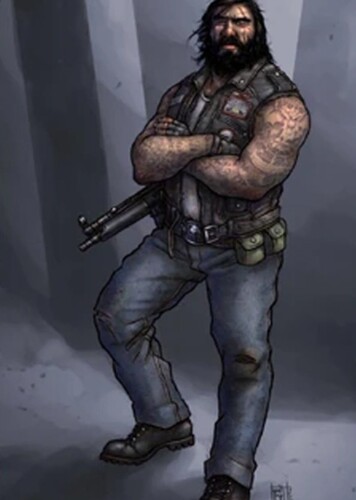
Age: 51
male
David Kenneth Harbour (born April 10, 1975) is an American actor. He has received nominations for a Tony Award, a Golden Globe Award, and two Primetime Emmy Awards. David began his career acting in Shakespearean theatre productions. After his professional debut on Broadway in the 1999 revival of The Rainmaker, he was nominated for a Tony Award for his performance in a production of Who's Afraid of Virginia Woolf?. He made his television debut on Law & Order in 1999 and had supporting roles in films such as Brokeback Mountain (2005), Revolutionary Road (2008) and Black Mass (2015). Harbour gained global recognition for his portrayal of Jim Hopper in the Netflix science fiction series Stranger Things (2016–2025), for which he received a Critics' Choice Television Award as well as nominations for two Primetime Emmy Awards. His starring film roles include the title character in Hellboy (2019), Santa Claus in Violent Night (2022) and a former racer in the sports film Gran Turismo (2023). Harbour has played Red Guardian in the Marvel Cinematic Universe media franchise, beginning with the film Black Widow (2021). Description above from the Wikipedia article David Harbour, licensed under CC-BY-SA, full list of contributors on Wikipedia.
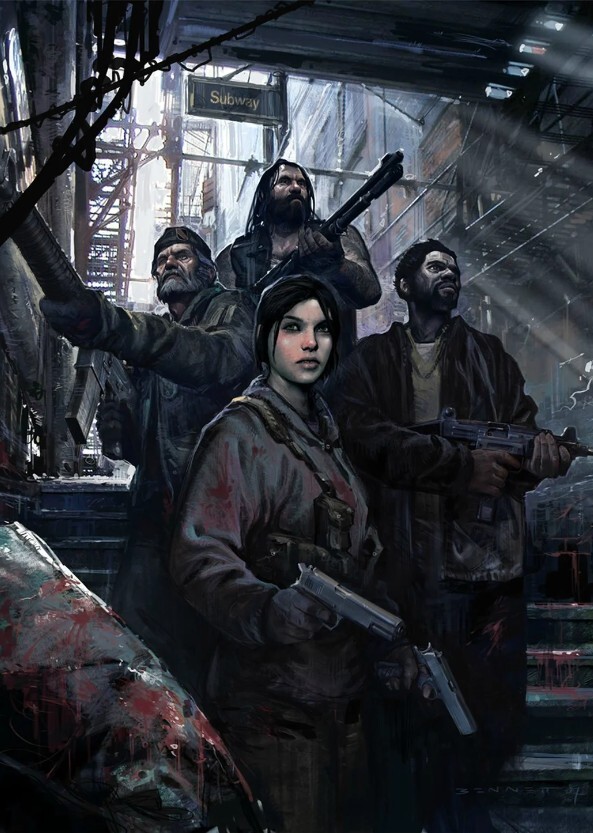
A virulent pathogen tears through major cities in a matter of weeks, collapsing infrastructure faster than governments can respond. The infected do not simply decay — they mutate under neurological overload, driven by hyper-aggression and distorted sensory processing. Streets empty. Power grids fail. Emergency broadcasts loop into silence. What remains is a fractured landscape of quarantined zones, mass graves, and abandoned highways where survival hinges on movement, trust, and timing. A small group of strangers attempts to cross this dead corridor toward a rumoured evacuation point as military containment measures escalate in the background. The infected are not uniform; some exhibit extreme physiological adaptations — explosive bile dispersal, predatory ambush behaviour, brute-force trauma resistance — forcing constant tactical adaptation. Supplies are scarce, ammunition scarcer. Every safe room is temporary. The true threat isn’t just the horde outside, but the mounting psychological strain within: exhaustion, paranoia, and the slow erosion of hope in a world where rescue may already be a myth.