Age: 73
male
Daniel Robert Elfman (born May 29, 1953) is an American film composer, singer, songwriter, and musician. He came to prominence as the lead vocalist and primary songwriter for the new wave band Oingo Boingo in the early 1980s. Since scoring his first studio film in 1985, Elfman has garnered international recognition for composing over 100 feature film scores, as well as compositions for television, stage productions, and the concert hall. Elfman has frequently worked with directors Tim Burton, Sam Raimi, and Gus Van Sant, contributing music to nearly 20 Burton projects, including Pee-Wee's Big Adventure, Beetlejuice, Batman, Edward Scissorhands, Batman Returns, Mars Attacks!, Sleepy Hollow, Big Fish, and Alice in Wonderland, as well as scoring Raimi's Darkman, A Simple Plan, Spider-Man, Spider-Man 2, Oz the Great and Powerful, and Doctor Strange in the Multiverse of Madness, and Van Sant's Academy Award-winning films Good Will Hunting and Milk. He wrote music for all of the Men in Black and Fifty Shades of Grey franchise films, the songs and score for Henry Selick's animated musical The Nightmare Before Christmas, and the themes for the popular television series Desperate Housewives and The Simpsons. Among his honours are four Oscar nominations, three Emmy Awards, a Grammy, seven Saturn Awards for Best Music, the 2002 Richard Kirk Award, the 2015 Disney Legend Award, the Max Steiner Film Music Achievement Award in 2017, and the Society of Composers & Lyricists Lifetime Achievement Award in 2022. Description above from the Wikipedia article Danny Elfman, licensed under CC-BY-SA, full list of contributors on Wikipedia.
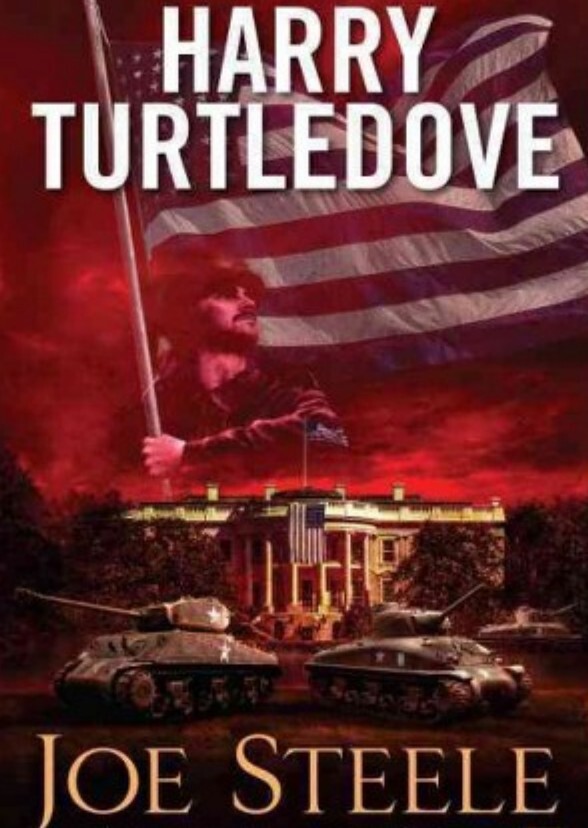
The novel explores what might have happened had Joseph Stalin been raised in America, postulating his parents having emigrated to the United States a few months before his birth, instead of remaining in the Russian Empire. It depicts Stalin (in this history, taking the name Joe Steele) growing up to be an American politician, rising to the presidency and retaining it by ruthless methods through the Great Depression, World War II, and the early Cold War. The president is depicted as having the soul of a tyrant, with Stalin's real-world career mirrored by actions taken by Steele.