Age: 222
Haiti, officially the Republic of Haiti, is a country in the Caribbean on the island of Hispaniola in the Caribbean Sea, east of Cuba and Jamaica and south of The Bahamas. It occupies the western side of the island, which it shares with the Dominican Republic. Haiti is the third largest country in the Caribbean by area, and with an estimated population of 11.4 million, it is the most populous Caribbean country. The capital and largest city is Port-au-Prince. For generations, the Haitian people carried the heavy, glorious weight of their own history. They were the sons and daughters of the 1492 landings, the ones who shattered the chains of the world’s most brutal colonial empire to forge the first free, Black-led republic in the Americas in 1804. They were the trailblazers of Latin America, the pioneers of the Caribbean, and the second oldest independent nation in the Western Hemisphere, after the United States. The scars of the 1915 United States occupation had faded into the dark, terror-filled decades of the Duvalier dictatorships. Then came the earth itself, shattering Port-au-Prince in 2010, followed by the lawless descent into a nation held hostage by heavily armed gangs. The streets of the capital had become no-go zones, illuminated only by gunfire and the burning remnants of a state in collapse. Inspired by the draconian transformations of El Salvador and Ecuador, a fierce new coalition government will took power in Port-au-Prince. They looked at their scarred history and made a vow to transform Haiti to become one of the safest country in the Caribbean, reclaiming its stolen dignity through absolute, uncompromising force. To build the ultimate symbol of this renewal, they enlisted engineers and tacticians from San Salvador and Quito. Together, they carved a fortress into the high rural mountains, far from the chaotic sprawl of the coast. They called it the Sanctuaire de Justice du Pic Silencieux (SJPS). To the media, it was the "Alcatraz of the West Indies." To the criminals who had terrorised the populace, it was simply "The Void." The architecture of the Sanctuaire was a masterpiece of psychological and structural engineering. Designed as a hypothetical, highly restrictive detention model, it was built specifically to counter the twin curses of Haiti from gang corruption and tectonic instability. On the surface, the prison appeared as a monolithic block of reinforced, obsidian-coloured concrete, blending seamlessly into the mountain’s peak. It was entirely unreachable by conventional means; there were no winding roads for gang convoys to launch rescue raids, only a single, heavily fortified funicular railway and a secure helipad protected by automated anti-aircraft batteries. A total gang crackdown in Port-au-Prince had swept thousands of warlords, enforcers, and corrupt officials off the streets in a matter of weeks. Those who stepped onto the mountain train knew one fundamental truth: they would never leave. The true terrors of Pic Silencieux, however, lay deep underground.Engineers knew that a fortress built to last an eternity in Haiti had to survive the violent shifts of the Enriquillo-Plantain Garden fault zone. Therefore, the entire subterranean structure a sprawling, multi-level labyrinth of cells did not touch the mountain's bedrock directly. Instead, it sat atop a massive network of seismic isolators. These giant, multi-layered rubber and steel bearings acted as shock absorbers, completely decoupling the prison from the shifting rock. If a catastrophic earthquake struck, the mountain might tear itself apart, but the underground prison would slide smoothly on its bearings, remaining entirely intact. Beneath the seismic dampening system lay the "gulag-style" dungeons. Here, the conditions were designed for absolute behavioral control. There were no bars, only seamless, blast-resistant smart-glass doors and walls of solid, soundproof polymer. Inmates were isolated 24 hours a day, seven days a week, bathed in perpetual, artificial white light to disrupt their sense of time. Surveillance was total. High-tech AI cameras tracked the micro-expressions and heart rates of the inmates through the glass, instantly detecting aggression or despair. There were no guards on the cell blocks; all movement was controlled remotely from a central, armored command bunker staffed by international security contractors. Heavy steel hatches operated on pneumatic pressure seals if a single breach was detected, entire sectors would automatically flood with non-lethal incapacitating gas, sealing the inmates in airtight tombs. There were no visitors, no yard time, and no communication with the outside world. The prison consumed its own waste and generated its own power via geothermal vents deep within the mountain. It was an island within an island, entirely self-sustaining and completely impenetrable. Down in Port-au-Prince and other major cities including Cap-Haitien, the transformation was immediate and jarring. For the first time in generations, the night air was filled not with the rattle of automatic weapons, but with the sounds of laughter, music, and commerce. Children played in the plazas of Bel-Air under the warm glow of new streetlights. Markets flourished in Delmas. The streets across all Haitian communities were safe, day and night, bought at the price of the silent fortress in the clouds. High on Pic Silencieux, the mist rolled over the concrete monolith. Deep beneath the earth, suspended on its steel bearings, the first Black republic’s darkest nightmares were locked away forever in a tomb of perfect, terrifying silence.
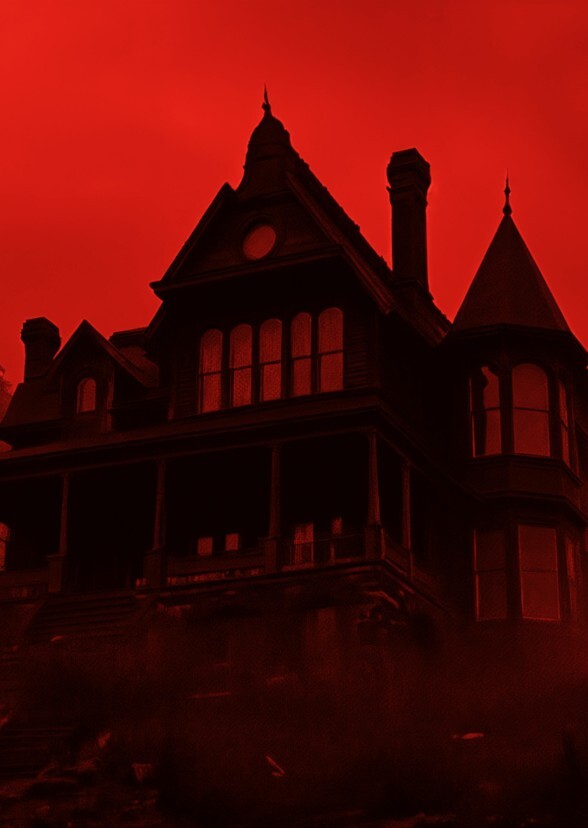
The intersection of real-world atrocities and fictional horror has created a vast ecosystem of media that explores the darkest depths of human history and mythology. Figures like Vlad the Impaler and Elizabeth Bathory serve as the genetic blueprint for vampire lore, while Mary I (Bloody Mary) is immortalised in urban legends and supernatural horror. The Haitian dictator François Duvalier (Papa Doc) as a voodoo practitioner who turned the living population of Haiti into zombies with poison by the secret police, the Tonton Macoutes (VSN). Serial killers like Ted Bundy, Jeffrey Dahmer, and John Wayne Gacy. The English singer Ozzy Osbourne who is known for his "Prince of Darkness" persona, his work—including tracks like Mr. Crowley—is steeped in occultism and horror themes, while the other band groups such as Sisters of Mercy titled "Dominion" has a gothic imagery that aligns with the "darker side of reality" often explored in horror aesthetics, including Meat Loaf which titled of the song "Rock and Roll Dreams Come Through," often utilized gothic and operatic horror elements. Authors like Stephen King and Clive Barker (creator of Hellraiser) have bridged the gap between literature and visual media.