Basilemys is a large, terrestrial trionychoid turtle that was from the Upper Cretaceous time period.[1] In Greek, the "Basil (name)" means royal or kingly and the word "Emys" means turtle. Therefore, Basilemys means King Turtle. The stratigraphic subdivisions of the Upper Cretaceous include Cenomanian, Turonian, Coniacian, Santonian, Campanian, and Maastrichtian. Basilemys was mostly from the Campanian and Maastrichtian subdivisions of the Cretaceous time period and is considered to be the largest terrestrial turtle of its time.[2] This extinct genus of land turtles belongs to the family Nanhsiungchelyidae.[2] Occurrences of Basilemys have largely been reported in the North America region.[3] It is interesting to note that the family Nanhsiungchelyidae made its first appearance in the Lower Cretaceous in Asia and we know from Basilemys that this family appeared in the Upper Cretaceous in North America.[4] The North American populations of Basilemys are considered to be immigrants from Asia through the Beringia during the Upper Cretaceous.[4] In an analysis made by Sukhanov et al. on a new Nansiunghelyid turtle from the Upper Cretaceous of Mongolia, it was demonstrated that Asian nanhsiungchelyids gave rise to the North American nanhsiungchelyids.[5] One genus from the family Nanhsiungchelyidae, Zangerlia, is similar to Basilemys in terms of skull proportions.[6] However, Basilemys has a more complex triturating surface that includes well-defined pockets on the dentary.[6] Basilemys also has tooth-like projections on the triturating surface of the maxilla.[6] From the turtle species, Basilemys is described to be most similar to tortoises.[3] Many paleontologists have described the behaviors of Basilemys to be similar to tortoises due to living in terrestrial habitats and the consumption of tough plants.[3] Moreover, the complex triturating surface that is a feature of Basilemys, indicates that they are similar to tortoises in being terrestrial and herbivores.[6] Basilemys is easily identifiable due to how thick its shell is, the intricate sculpture of rows of triangular tubercles separated by pits, and reduced inframarginal scales.[2] The fossil record is abundant with shell and appendicular material for Basilemys, but cranial and cervical material is quite rare.[1]
Basilemys

Prehistoric Creatures
for Prehistoric Creatures in Goner
Suggested by alecgroskreutz1
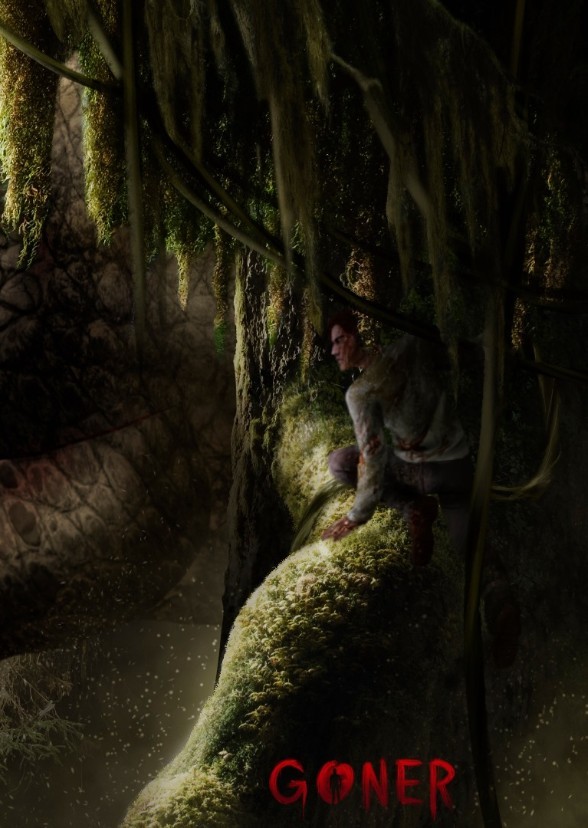
Goner is an epic horror adventure starring Anthony Sunder, a son looking for his missing mother and her expedition crew. His search will lead him to the location of a ghost island inhabited by hostile members of a lost civilization and feral fauna you thought extinct. Goner is a new take on the survival genre featuring breathtaking 3D visuals, advanced AI driven by complex behaviours and interactions that will test your skills and determination to stay alive. Face these massive creatures and try not to get caught. This time you are not a heavy armed hero, just a regular dude. Of course, you will be able to defend yourself with anything you can craft with your own two hands... There is where the true horror resides. They can see, hear, and...smell you. Often, running and hiding would be your best choice. Across the island, you will find safe spots (Such as shallow caves, structures, or even high tree branches). Use them to your advantage, fill your backpack and prepare yourself for the unexpected. Self-management is crucial, think about what you are going to need to survive till the next location and get to live another day.