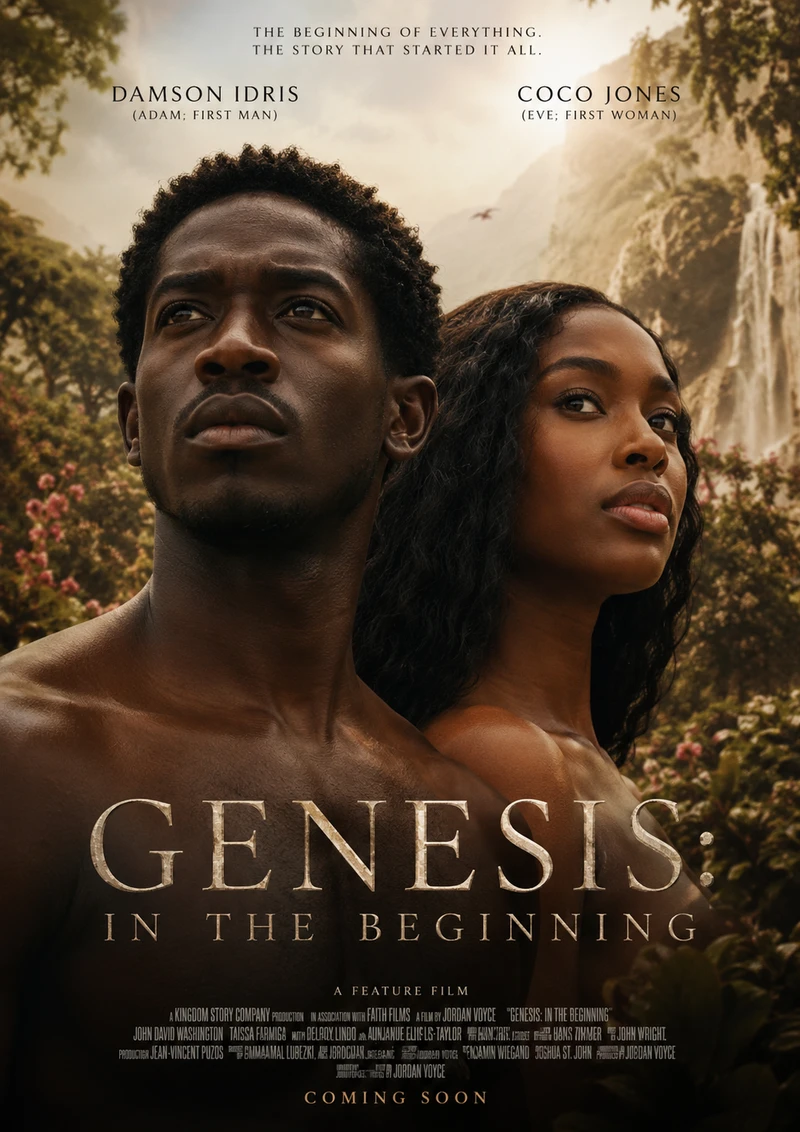
From the first light to the flood — the opening chapters of human history given the visual grandeur they demand. An epic cinematic treatment of Genesis chapters 1 through 11 — from the creation of the world through the Tower of Babel. The film is structured in four movements: Creation (the six days, rendered as visual poetry rather than literalism, the camera finding beauty in each emerging element of the world); the Garden (Adam and Eve in their full complexity — not naive children but the first fully realized humans, their choice presented with the moral weight it deserves); the Fall's Consequence (Cain and Abel, humanity's first murder, the catastrophic grief of parents watching children destroy each other); and the Flood (Noah's ark, presented with archaeological and geographical fidelity to the ancient Near Eastern world, the specific moral weight of divine judgment and mercy held simultaneously). The film's visual language draws from ancient Mesopotamian art — ochre, lapis lazuli, terracotta, the specific palette of the world's oldest civilization. Movement One — The Light Creation rendered as visual poetry. The camera moving through emerging worlds. The seventh day's rest. Movement Two — The Garden Adam and Eve in their fullness. The choice and its immediate consequence. Their exile — not as abandonment but as the beginning of a harder, more human story. Movement Three — The Two Brothers Cain and Abel. The offering. The murder. The mark. The film's most intimate and most devastating section. Movement Four — The Flood Noah building the ark across decades. The rain beginning. The waters. The dove. The rainbow's promise.